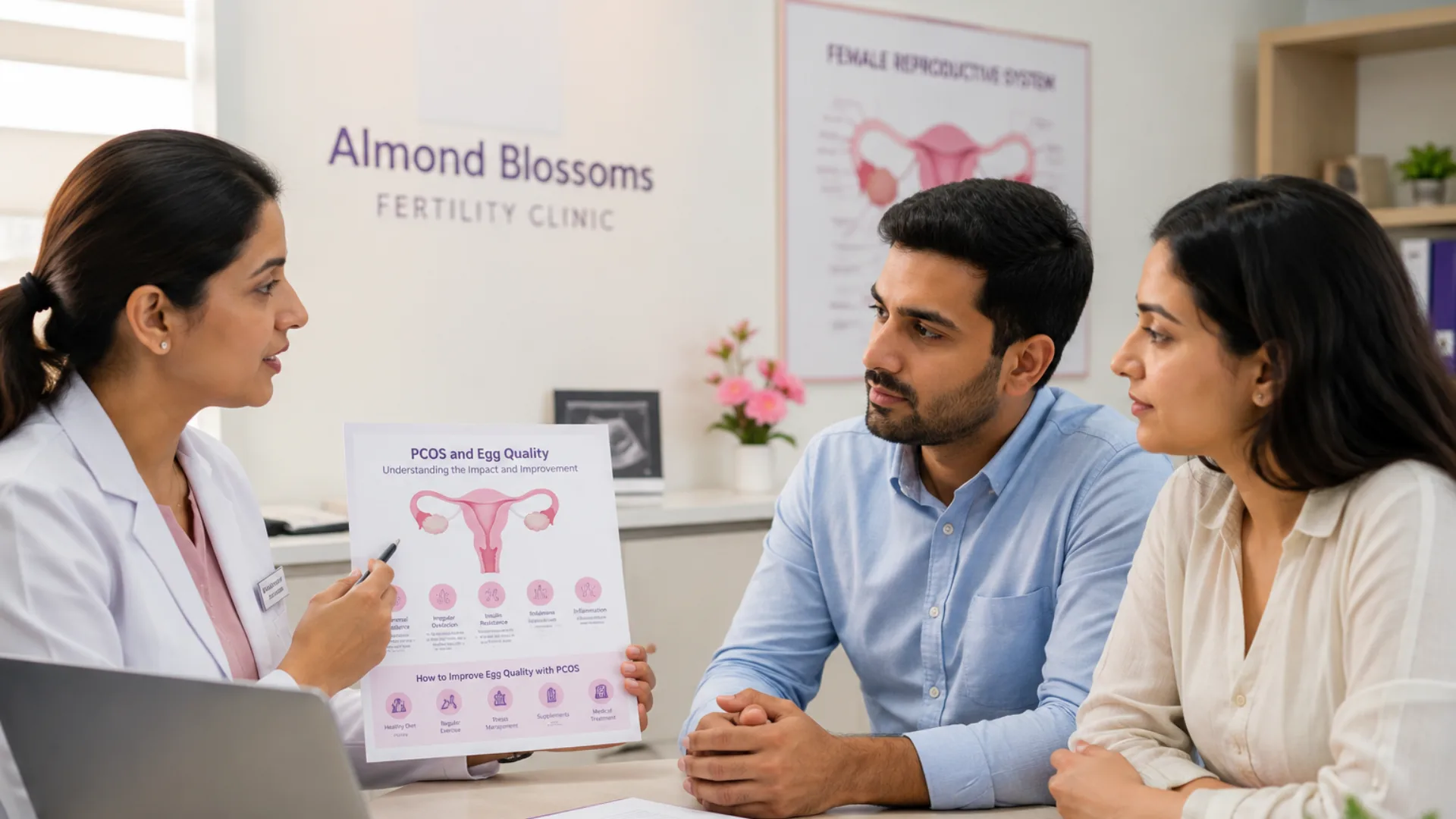
Yes, women with PCOS can take steps to support healthy egg development, although PCOS does not always mean that the eggs are poor quality. PCOS can affect ovulation, hormone balance, insulin sensitivity, and follicle development, which may influence fertility.
The best way to support egg health with PCOS is to address the factors that affect reproductive health, including insulin resistance, nutrition, physical activity, sleep, stress, and hormonal balance. Depending on your fertility goals, a fertility specialist may also recommend ovulation induction or IVF treatment.
In this guide, we explain how to improve egg quality with PCOS naturally, which foods and lifestyle habits may support fertility, what to know about supplements, and when medical fertility treatment may be appropriate.
How to Improve Egg Quality With PCOS
PCOS does not automatically mean poor egg quality. To support egg health and fertility, focus on managing insulin resistance, eating a balanced nutrient-rich diet, exercising regularly, maintaining healthy sleep, avoiding smoking, limiting alcohol, and correcting confirmed nutrient deficiencies. If ovulation remains irregular or pregnancy is difficult to achieve, a fertility specialist can assess your hormones, ovarian reserve, and other fertility factors and recommend appropriate treatment.
What Does Egg Quality Mean?
Egg quality refers to how healthy an egg is and whether it contains the correct number of chromosomes needed to create a healthy embryo.
Healthy eggs are more likely to:
- Fertilize successfully
- Develop into high-quality embryos
- Implant in the uterus
- Lead to a healthy pregnancy
- Reduce miscarriage risk
Unlike egg quantity, which naturally declines with age, egg quality is influenced by hormonal balance, metabolism, inflammation, oxidative stress, and lifestyle factors.

Does PCOS Affect Egg Quality?
Many women believe PCOS means they have “bad eggs.”
This is only partly true.
Women with PCOS usually have:
- A higher ovarian reserve
- More follicles than average
- Delayed or irregular ovulation
The main problem isn’t having too few eggs; it is that hormonal imbalances can prevent eggs from maturing properly.
PCOS may affect:
- Egg maturation
- Ovulation
- Hormonal signaling
- Embryo development
- Implantation success
Fortunately, these factors are often treatable.
How Can PCOS Affect Egg Quality and Ovulation?
PCOS does not necessarily mean that a woman has poor-quality eggs. However, hormonal and metabolic changes associated with PCOS can affect follicle development, ovulation, and the environment in which eggs mature.
Factors that may affect fertility in women with PCOS include:
- Insulin resistance
- Elevated androgen levels
- Irregular or absent ovulation
- Hormonal imbalance
- Metabolic health
- Inflammation and oxidative stress
For this reason, fertility care for PCOS should focus on the individual’s overall reproductive and metabolic health rather than egg quality alone.
How to Improve Egg Quality with PCOS Naturally
Improving egg quality requires a combination of lifestyle changes and medical support.
1. Maintain a Healthy Weight
Even losing 5–10% of body weight can:
- Improve ovulation
- Balance hormones
- Lower insulin resistance
- Increase fertility
Weight loss should be gradual rather than extreme.
2. Best Foods to Support Egg Health With PCOS
There is no single food that can improve egg quality overnight. However, a balanced diet can support metabolic health, hormone regulation, and overall fertility, particularly when PCOS is associated with insulin resistance.
Foods to include regularly may include:
- Leafy green vegetables
- Berries and other whole fruits
- Beans and lentils
- Whole grains and other high-fibre carbohydrates
- Nuts and seeds
- Olive oil
- Avocado
- Eggs
- Fatty fish such as salmon and sardines
- Other minimally processed protein sources
For women with PCOS, choosing high-fibre carbohydrates and pairing them with protein and healthy fats can also help support more stable blood glucose levels.
Rather than following a highly restrictive fertility diet, focus on a sustainable eating pattern that supports your overall health.
3. Exercise Regularly
Aim for:
- 150 minutes of moderate exercise weekly
Good options include:
- Walking
- Swimming
- Cycling
- Strength training
- Yoga
Exercise improves insulin sensitivity and hormone regulation.
4. Improve Sleep
Poor sleep increases cortisol and insulin resistance.
Try to get:
- 7–9 hours nightly
Maintain consistent sleep and wake times.
5. Reduce Stress
High stress hormones may negatively affect ovulation.
Helpful strategies include:
- Meditation
- Yoga
- Deep breathing
- Counseling
- Journaling
6. Stop Smoking
Smoking accelerates egg aging and increases oxidative stress.
Quitting smoking benefits both natural conception and IVF outcomes.
7. Limit Alcohol
Reducing alcohol intake supports hormonal balance and reproductive health.
Supplements for PCOS and Egg Health: What to Know
Supplements should not be used as a substitute for medical fertility care, and there is no single supplement proven to improve egg quality for every woman with PCOS.
Depending on your individual health and nutritional status, a fertility specialist may discuss supplements such as:
- Myo-inositol
- Folic acid
- Vitamin D when deficiency is present
- Omega-3 fatty acids
- Coenzyme Q10 (CoQ10)
The appropriate supplement, dose and duration depend on your medical history, medications, nutritional status and fertility treatment plan. Speak with your fertility specialist before starting or combining fertility supplements
Can Egg Quality Improve Naturally With PCOS?
PCOS does not mean that you cannot have healthy eggs or a healthy pregnancy. However, there is no guaranteed diet, supplement, or lifestyle change that can permanently increase egg quality.
What you can do is support the factors involved in healthy reproductive function.
This may include:
- Managing insulin resistance when present
- Supporting healthy ovulation
- Eating a nutrient-rich, balanced diet
- Exercising regularly
- Getting adequate sleep
- Avoiding smoking
- Limiting alcohol
- Correcting confirmed nutritional deficiencies
- Managing other medical conditions
- Seeking fertility assessment when needed
If you are trying to conceive, a fertility specialist can determine whether the main issue is ovulation, egg-related factors, sperm quality, the fallopian tubes, or another fertility factor.
PCOS Egg Quality vs Egg Quantity: What’s the Difference?
Egg quantity and egg quality are not the same thing.
Egg quantity refers to the number of eggs or follicles available in the ovaries, while egg quality refers to the ability of an egg to fertilize, develop into a healthy embryo, and contribute to a healthy pregnancy.
Women with PCOS may have many follicles or a higher ovarian reserve, but this does not automatically mean that every egg will be healthy or unhealthy.
Fertility assessment therefore looks at more than egg quantity. Your age, ovulation pattern, ovarian reserve, hormone levels, sperm quality, fallopian tubes, and other health factors may all influence your chances of pregnancy.
Can Women with PCOS Have Healthy Pregnancies?
Absolutely.
Many women with PCOS become mothers naturally or through fertility treatment.
Success depends on factors including:
- Age
- BMI
- Hormonal balance
- Egg quality
- Sperm quality
- Overall health
- Timely fertility evaluation
Early diagnosis generally leads to better outcomes.
When Should You See a Fertility Specialist for PCOS?
Consider a fertility consultation if you have PCOS and:
- Your periods are very irregular or absent
- You are not ovulating regularly
- You have been trying to conceive without success
- You have experienced recurrent miscarriage
- You have previously had an unsuccessful fertility treatment
- You are concerned about your ovarian reserve or fertility
- You are considering egg freezing or IVF
A fertility assessment may include a review of your menstrual cycle, hormone testing, ovarian reserve assessment, pelvic ultrasound and, when appropriate, evaluation of sperm and the fallopian tubes.
How Almond Blossoms Fertility Clinic Can Help
At Almond Blossoms Fertility Clinic Dubai, every treatment plan is personalized to your unique fertility needs.
Our comprehensive fertility services include:
- Fertility consultations and investigations
- Female fertility assessments
- Male fertility evaluations
- PCOS diagnosis and treatment
- Ovulation induction
- IVF treatment
- ICSI treatment
- Egg freezing
- Embryo freezing
- Fertility preservation
- Genetic testing
- Recurrent miscarriage management
- Personalized fertility planning
Using advanced reproductive technologies and compassionate care, our experienced fertility specialists support couples at every stage of their parenthood journey.
Conclusion
PCOS can make pregnancy more challenging, but it does not define your fertility future. By improving insulin sensitivity, balancing hormones, maintaining a healthy lifestyle, and seeking timely fertility care, many women can enhance egg quality, restore ovulation, and increase their chances of a healthy pregnancy.
Whether you’re trying to conceive naturally or considering IVF, early assessment and personalized treatment can make a significant difference. At Almond Blossoms Fertility Clinic Dubai, our team is committed to helping you take the next step with confidence through evidence-based fertility care tailored to your individual needs.
PCOS Fertility Support in Dubai
If you have PCOS and are trying to conceive, Almond Blossoms Fertility & Wellbeing Centre in Dubai provides personalised fertility assessment and treatment based on your individual needs.
Your consultation may help identify whether irregular ovulation, hormonal or metabolic factors, sperm quality, ovarian reserve, or another fertility issue is affecting your chances of conception.
Depending on your assessment, our fertility team may discuss options such as fertility testing, ovulation induction, IUI, IVF, ICSI and fertility preservation.
If you are looking for PCOS fertility treatment in Dubai, book a consultation with our fertility team to discuss your next steps.
→ Book a Consultation in Dubai
→ Website
Frequently Asked Questions (FAQs)
Can PCOS affect egg quality?
PCOS does not automatically mean poor egg quality. However, hormonal imbalance, insulin resistance, and irregular ovulation associated with PCOS can affect follicle development and fertility. A fertility assessment can help identify the factors affecting your individual reproductive health.
How can I improve egg quality with PCOS naturally?
Leafy greens, berries, whole grains, beans, lentils, nuts, seeds, olive oil, avocado, and fatty fish can form part of a balanced, fertility-supportive diet. There is no single food that can guarantee improved egg quality.
Can IVF help women with PCOS get pregnant?
Yes. IVF can be an effective treatment for some women with PCOS-related infertility, particularly when ovulation-induction treatments have not worked or other fertility factors are present. IVF treatment should be individually planned because women with PCOS can have an increased risk of ovarian hyperstimulation syndrome.
Does having PCOS mean I have poor-quality eggs?
No. PCOS does not automatically mean that your eggs are poor quality. Women with PCOS may have a higher ovarian reserve but experience irregular ovulation or hormonal and metabolic changes that can affect fertility.
What supplements are used for egg health with PCOS?
Depending on your individual needs, a fertility specialist may discuss supplements such as myo-inositol, folic acid, vitamin D, omega-3 fatty acids, or CoQ10. Supplements should be selected based on your health and nutritional needs rather than taken routinely without guidance.