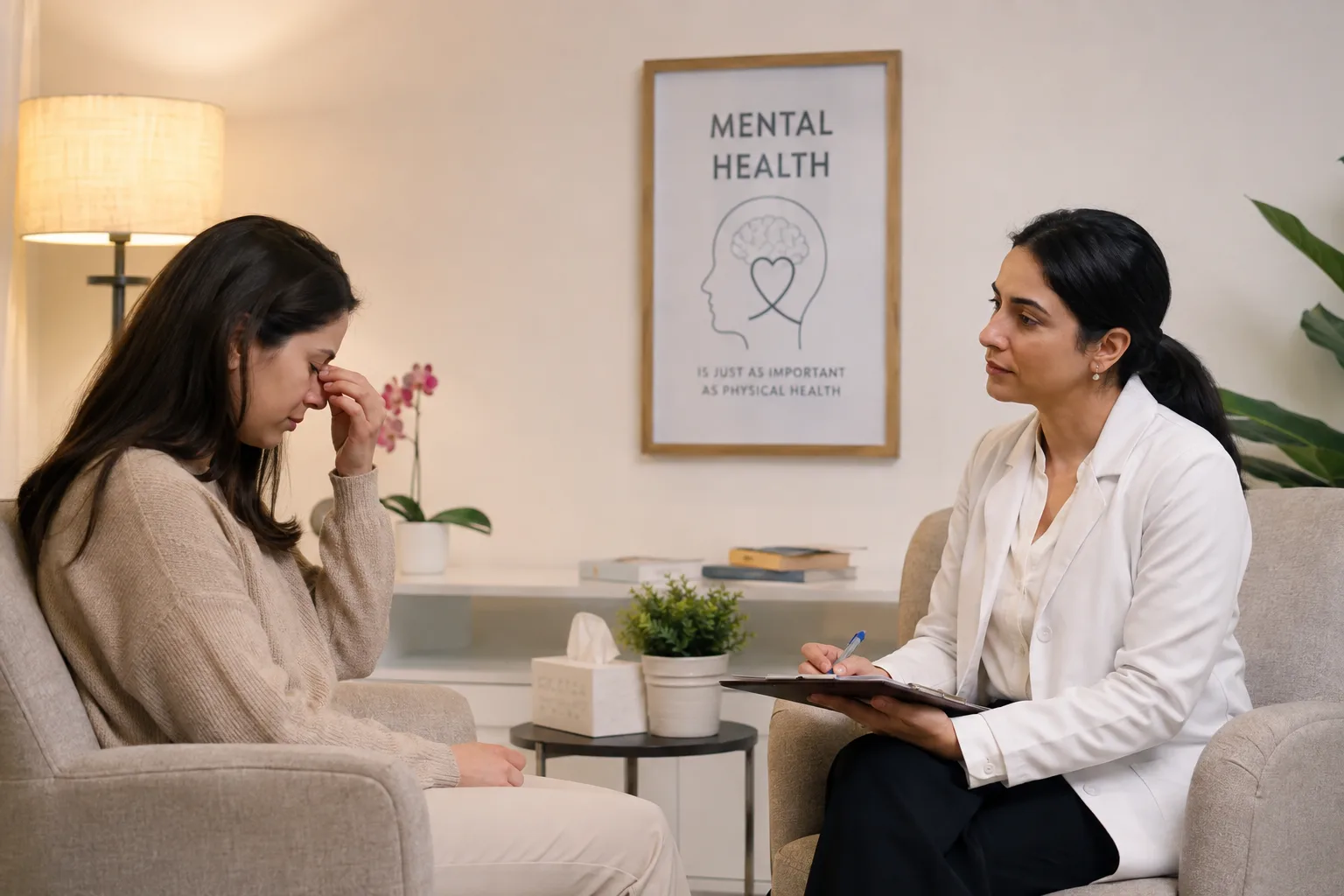
Pregnancy and the months after childbirth can bring major emotional changes, including anxiety, low mood, overwhelm, or difficulty bonding with your baby. A psychologist specialist can help you understand these changes and access appropriate support for postpartum mental health before they begin affecting your daily life, relationships, or wellbeing.
At Almond Blossoms Fertility & Wellbeing Center in Dubai Healthcare City, psychological care is integrated with fertility and women’s health services, allowing emotional and physical concerns to be considered together.
Key Takeaways
- Postpartum mental health concerns can include depression, anxiety, intrusive thoughts, emotional overwhelm, and difficulty bonding with your baby.
- Not every emotional change after birth means postpartum depression, but persistent or worsening symptoms deserve professional assessment.
- A psychologist specialist can provide therapy and emotional support, while psychiatrists can become involved when medical assessment or medication is clinically appropriate.

What Is Postpartum Mental Health?
Postpartum mental health refers to your emotional and psychological wellbeing after giving birth. The postpartum period can involve significant physical, hormonal, social, and lifestyle changes, while caring for a newborn can introduce sleep disruption, uncertainty, and new responsibilities.
Some emotional changes are temporary. Others can become persistent and interfere with your ability to function or enjoy daily life.
Postpartum mental health concerns may include:
- Postpartum depression
- Postpartum anxiety
- Panic symptoms
- Persistent sadness or irritability
- Excessive worry about the baby’s health or safety
- Feelings of guilt or inadequacy
- Difficulty bonding with your baby
- Emotional numbness or detachment
- Sleep difficulties beyond those caused by normal newborn care
- Distressing or intrusive thoughts
- Relationship difficulties after becoming parents
These experiences do not mean that you are a bad parent or that you do not love your baby.
They are signs that you may need additional emotional support.
Almond Blossoms‘ perinatal and postpartum mental health service specifically addresses psychological conditions arising during pregnancy and after childbirth, including depression and anxiety.
What is the difference between perinatal and postpartum mental health?
Perinatal mental health is a broader term covering mental health during pregnancy and the period following childbirth.
Postpartum mental health specifically refers to the period after giving birth.
This distinction matters because emotional difficulties can begin before delivery and continue or develop after your baby is born. Seeking support during pregnancy can therefore be just as important as seeking help after childbirth.
What Are the Signs You May Need a Psychological Specialist?
One of the most common questions new parents ask is:
“How do I know if I need psychological support after having a baby?”
You do not need to wait until you feel completely overwhelmed.
Consider speaking with a psychologist specialist if emotional or psychological symptoms are persistent, becoming stronger, or interfering with your everyday life.
You may notice:
Persistent sadness or frequent crying
Feeling tearful occasionally can happen after childbirth. However, persistent sadness, emptiness, hopelessness, or loss of enjoyment deserves attention.
Constant worry or fear
Postpartum anxiety may involve excessive worrying about your baby, your health, your partner, or something going wrong.
Your thoughts may feel difficult to switch off, even when everything appears to be fine.
Difficulty bonding with your baby
Some parents expect an immediate emotional connection with their newborn. In reality, bonding can develop gradually.
If you consistently feel detached, emotionally numb, or distressed about your relationship with your baby, discussing these feelings with a psychologist can help.
Guilt and feelings of inadequacy
You may find yourself thinking:
- “I should be happier.”
- “I am not doing enough.”
- “I am failing as a mother.”
- “Everyone else seems to manage this better than me.”
These thoughts can become part of a cycle of anxiety and low mood.
Relationship strain
Pregnancy and new parenthood can change communication, intimacy, responsibilities, and expectations between partners.
Couples counselling can provide a structured environment to discuss these changes rather than allowing resentment or emotional distance to build.
Intrusive or frightening thoughts
Some new parents experience unwanted thoughts or images that feel disturbing or completely inconsistent with what they actually want.
Because these thoughts can be frightening, it is important to discuss them honestly with an appropriately trained mental health professional rather than keeping them hidden because of shame.
Baby Blues vs Postpartum Depression: What Is the Difference?
A frequently searched question is:
“How long do the baby blues last?”
The baby blues are short-term emotional changes that can occur after childbirth. You may feel tearful, irritable, overwhelmed, or unusually emotional.
They commonly improve within around two weeks.
Postpartum depression is different. Symptoms tend to be more persistent, severe, or disruptive and may include depression, hopelessness, loss of interest, guilt, anxiety, or difficulty functioning.
A simple way to think about it is:
| Baby Blues | Postpartum Depression |
| Usually short-lived | Can persist and worsen |
| Mood changes may come and go | Symptoms may be persistent |
| Usually improves with time and support | Often requires professional assessment and treatment |
| Daily functioning is generally maintained | Daily functioning may become difficult |
| Usually resolves within about two weeks | Can last much longer without appropriate care |
You do not have to diagnose yourself based on a checklist.
If you are concerned about your emotional health after childbirth, a psychologist or psychiatrist can assess what you are experiencing and recommend appropriate support.
Almond Blossoms notes that postpartum conditions are more serious than temporary “baby blues” and provides screening, assessment, psychological counselling, and multidisciplinary support.
How Can a Specialist Psychologist Help With Postpartum Mental Health?
A specialist psychologist can provide professional psychological assessment and therapy to help you understand and manage emotional difficulties.
At Almond Blossoms, the Wellbeing Centre brings together psychologists, psychiatrists, neuropsychologists, and other mental health professionals.
Individual therapy
Individual therapy gives you private time to discuss what you are experiencing without needing to protect other people’s feelings.
Depending on your needs, therapy may focus on:
- Anxiety and excessive worry
- Depression and low mood
- Stress management
- Emotional regulation
- Adjustment to parenthood
- Self-esteem and guilt
- Trauma or difficult birth experiences
- Relationship changes
- Coping strategies
Your psychologist can determine which therapeutic approach is appropriate for your circumstances.
Couples counselling
Postpartum challenges affect both individuals and relationships.
Partners may disagree about:
- Baby-care responsibilities
- Sleep and routines
- Family involvement
- Work and financial pressures
- Physical intimacy
- Emotional availability
- Parenting expectations
Couples therapy can help partners communicate more effectively and understand each other’s experiences.
For couples who have also experienced infertility or fertility treatment, the emotional transition from trying to conceive to becoming parents can be particularly complex.
Psychological support after fertility treatment
Pregnancy after IVF, ICSI, IUI, or previous pregnancy loss can sometimes bring complicated emotions.
You may feel grateful and happy while simultaneously worrying about miscarriage, medical appointments, pregnancy complications, or whether everything will be okay.
These feelings can coexist.
Almond Blossoms combines fertility care with psychological wellbeing support, allowing patients to access fertility specialists and mental health professionals within the same integrated care environment.
When psychiatric support may be appropriate
A psychologist and psychiatrist have different roles.
A psychologist primarily provides psychological assessment and therapy, while a psychiatrist is a medical doctor who can assess psychiatric conditions and prescribe medication when clinically appropriate.
For some people, collaborative care involving both professionals may be appropriate.
If you are pregnant or breastfeeding and medication is being considered, the decision should always be made with an appropriately qualified medical professional who can consider your individual circumstances.
Why Is Postpartum Mental Health Important for the Whole Family?
Postpartum mental health is not only about how you feel individually.
Your emotional wellbeing can affect how you communicate with your partner, respond to everyday parenting demands, manage relationships, and adjust to your new family structure.
This is particularly relevant for couples living away from extended family.
For expat parents in Dubai, pregnancy and early parenthood may occur without grandparents or other relatives living nearby. Work responsibilities, cultural expectations, relocation stress, and limited local support can add another layer of pressure.
That does not mean you will develop a mental health condition.
It simply means that having access to professional support can be valuable when your usual support network is limited.
Almond Blossoms’ Wellbeing Centre specifically provides care for individuals and couples and includes interpersonal and marital concerns alongside fertility and perinatal and postpartum support.
Supporting your partner matters too
Partners can also experience anxiety, stress, sleep deprivation, grief, or feelings of helplessness during the transition to parenthood.
Mental health support does not have to be limited to the mother.
Individual therapy, couples counselling, or appropriate family support can help address the emotional needs of the wider family.
When Should You Seek Postpartum Mental Health Support?
You do not need to wait for symptoms to become severe.
Consider speaking with a psychologist specialist if:
- Your mood has changed significantly and does not seem to be improving.
- Anxiety is interfering with sleep, relationships, work, or daily activities.
- You feel disconnected from yourself or your baby.
- Guilt or self-criticism has become overwhelming.
- You are avoiding people or activities you previously enjoyed.
- Your relationship is experiencing significant conflict.
- You experienced a traumatic birth, pregnancy loss, or difficult fertility journey.
- You are struggling to cope despite support from family or friends.
Importantly, seeking therapy does not mean you have a serious mental illness.
You can speak with a psychologist simply because you want professional help navigating a major life transition.
What about thoughts of harming yourself or your baby?
Thoughts of self-harm or harming your baby require urgent professional assessment.
Postpartum psychosis is rare but is a serious psychiatric emergency that can involve hallucinations, delusions, confusion, or severely disorganized thinking. Almond Blossoms identifies postpartum psychosis as a condition requiring urgent medical attention. If you or someone close to you experiences these symptoms, seek emergency medical care immediately rather than waiting for a routine therapy appointment.
Choosing a Psychologist Specialist in Dubai for Postpartum Care
If you are searching online for a psychologist specialist in Dubai, qualifications and relevant experience should matter more than simply choosing the first available appointment.
Consider asking:
- Is the psychologist appropriately licensed to practise in the UAE?
- Do they have experience with women’s or perinatal mental health?
- Do they work with postpartum depression and anxiety?
- Can they provide individual or couples therapy?
- Do they understand fertility-related emotional challenges?
- Can they collaborate with psychiatrists or medical specialists when needed?
- Do you feel comfortable communicating openly with them?
At Almond Blossoms, the Wellbeing Centre includes dedicated psychology professionals alongside fertility specialists. The team includes Dr. Vassiliki Simoglou, Director of the Wellbeing Center and Clinical Psychologist, and Dr. Candice Render, a Counselling Psychologist.
Dr. Candice Render is listed by Almond Blossoms as a DHA- and CDA-licensed psychologist with more than 25 years of international clinical experience and expertise across emotional, relational, trauma, and life-transition concerns.
The benefit of this integrated model is that emotional wellbeing does not have to be treated as something separate from fertility and women’s healthcare.
Conclusion: Postpartum Mental Health Deserves Professional Support
Pregnancy and new parenthood can bring happiness, uncertainty, exhaustion, anxiety, and many emotions at the same time. You do not have to label yourself or decide alone whether what you are experiencing is “normal.”
A psychologist specialist can help you understand persistent emotional changes, develop practical coping strategies, and work through concerns affecting your wellbeing or relationships.
At Almond Blossoms Fertility & Wellbeing Center in Dubai Healthcare City, fertility specialists and mental health professionals work within an integrated model that addresses both reproductive and emotional wellbeing.
If pregnancy or postpartum changes are becoming emotionally difficult, speak with our fertility and wellbeing team and book a consultation.
A Consultation in Dubai
→ Website
Frequently Asked Questions (FAQs)
What is postpartum mental health?
Postpartum mental health refers to your psychological and emotional wellbeing after childbirth. It can include normal emotional adjustment as well as conditions such as postpartum depression and postpartum anxiety.
When should I see a psychologist after giving birth?
Consider speaking with a psychologist when persistent sadness, anxiety, guilt, emotional detachment, relationship difficulties, or other symptoms are affecting your daily life. You do not need to wait until symptoms become severe.
Can a psychologist help with postpartum anxiety?
Yes. A psychologist can assess your symptoms and provide appropriate psychological therapy and coping strategies. If symptoms require medical assessment or medication, a psychiatrist may also be involved.
Can postpartum depression happen after IVF?
Yes. Postpartum depression can occur regardless of how pregnancy was achieved. However, after a long or emotionally difficult fertility journey, pregnancy and parenthood may bring additional worries or emotional challenges that can benefit from psychological support.
Can my partner join therapy?
Yes. Depending on your needs, couples counselling can help partners address communication problems, changing responsibilities, emotional distance, intimacy concerns, and the adjustment to parenthood.