Perimenopause and Mental Health:
Perimenopause—the transition phase leading up to menopause, which can begin anywhere from the late 30s into the 50s—is one of the most physiologically significant periods in a woman’s life. And yet it remains one of the most under-discussed, under-diagnosed, and under-treated transitions in women’s healthcare, including in Dubai.
At Almond Blossoms Wellbeing Center, we see women regularly who have spent months—sometimes years—seeking answers for symptoms that are frequently dismissed, misdiagnosed as anxiety disorder, or attributed to workplace stress. This post is for them. And for anyone who suspects that what they are experiencing might be more than it appears.
What Is Perimenopause, and Why Does It Affect Mental Health?
Perimenopause is the hormonal transition that precedes menopause (the point at which a woman has not had a period for 12 consecutive months). During perimenopause, estrogen and progesterone levels fluctuate erratically before declining. These fluctuations do not just affect the body — they have a profound and direct effect on the brain.
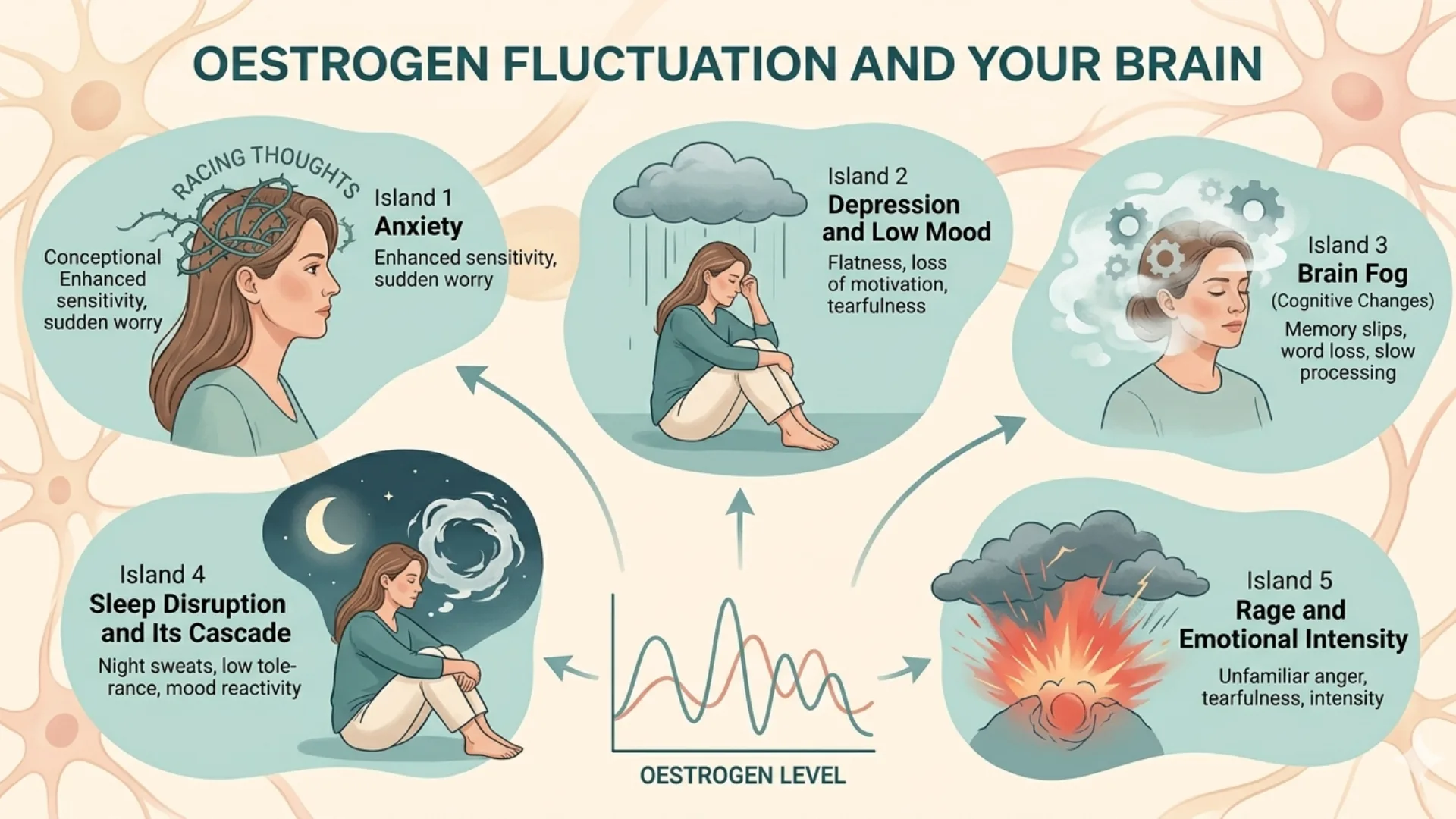
Oestrogen, in particular, plays a critical role in the regulation of serotonin, dopamine, and norepinephrine—the neurotransmitters most closely associated with mood, motivation, and emotional regulation. As oestrogen levels become unstable, so too can the neurochemical systems they support. This is not a metaphor. It is neurophysiology.
The Mental Health Symptoms of Perimenopause Most Often Missed in Dubai
The physical symptoms of perimenopause—hot flushes, night sweats, and irregular periods—are relatively well known. The psychological symptoms receive far less attention and are far more frequently missed:
- Anxiety
Many women describe experiencing anxiety for the first time in perimenopause, or noticing a significant increase in existing anxiety. This can manifest as a pervasive sense of dread, sudden panic attacks, heightened irritability, or a feeling of being unable to cope with situations that were previously manageable. In Dubai’s high-performance professional culture, this is frequently attributed to work pressure — and treated accordingly, often without lasting effect, because the hormonal root cause is not being addressed.
- Depression and Low Mood
Declining oestrogen is directly linked to reduced serotonin activity. For women with no prior history of depression, perimenopausal mood changes can be bewildering—a persistent flatness, loss of pleasure in things that used to matter, tearfulness without an obvious cause, or a profound sense that something is wrong that is very difficult to name. For women with a prior history of depression, perimenopause can trigger a significant episode.
- Cognitive Changes — ‘Brain Fog’
Difficulties with concentration, memory, and mental clarity are among the most distressing perimenopausal symptoms, precisely because they can feel so destabilizing in a professional context. Many women describe a sense of not feeling like themselves—losing words mid-sentence, forgetting things they would never usually forget, or struggling to sustain focus. These symptoms are real, they are hormonally driven, and they do improve.
- Sleep Disruption and Its Cascade
Night sweats and hormonal fluctuations directly disrupt sleep architecture during perimenopause. The mental health consequences of sustained poor sleep — including increased anxiety, lowered mood, reduced stress tolerance, and heightened emotional reactivity — compound everything else. Treating the sleep disruption is often one of the most effective first steps in improving perimenopausal mental health overall.
- Rage, Irritability and Emotional Intensity
This is the symptom women most rarely mention to their doctors, and most frequently mention to us. A sudden, disproportionate emotional intensity — a rage that feels unfamiliar, a tearfulness that seems out of nowhere — is extremely common in perimenopause and is directly connected to progesterone fluctuation. It is not a personality change. It is a hormonal event.
Why Perimenopausal Mental Health Is Frequently Misdiagnosed
Because perimenopausal mental health symptoms so closely mimic generalized anxiety disorder, major depressive disorder, and burnout—and because women in their 40s are statistically likely to be managing significant life demands—perimenopause is routinely missed as the underlying driver.
The result is that many women receive treatment for anxiety or depression that produces partial results at best, because the foundational hormonal context is not being addressed. This is not a failure of willpower, nor of therapy. It is a diagnostic gap.
At Almond Blossoms, our integrated approach means that psychological assessment always includes consideration of hormonal context. When we see a woman in her 40s presenting with new-onset anxiety, mood changes, or cognitive difficulties, perimenopause is on our differential—not as an afterthought, but from the first conversation.
What Effective Support for Perimenopausal Mental Health Looks Like
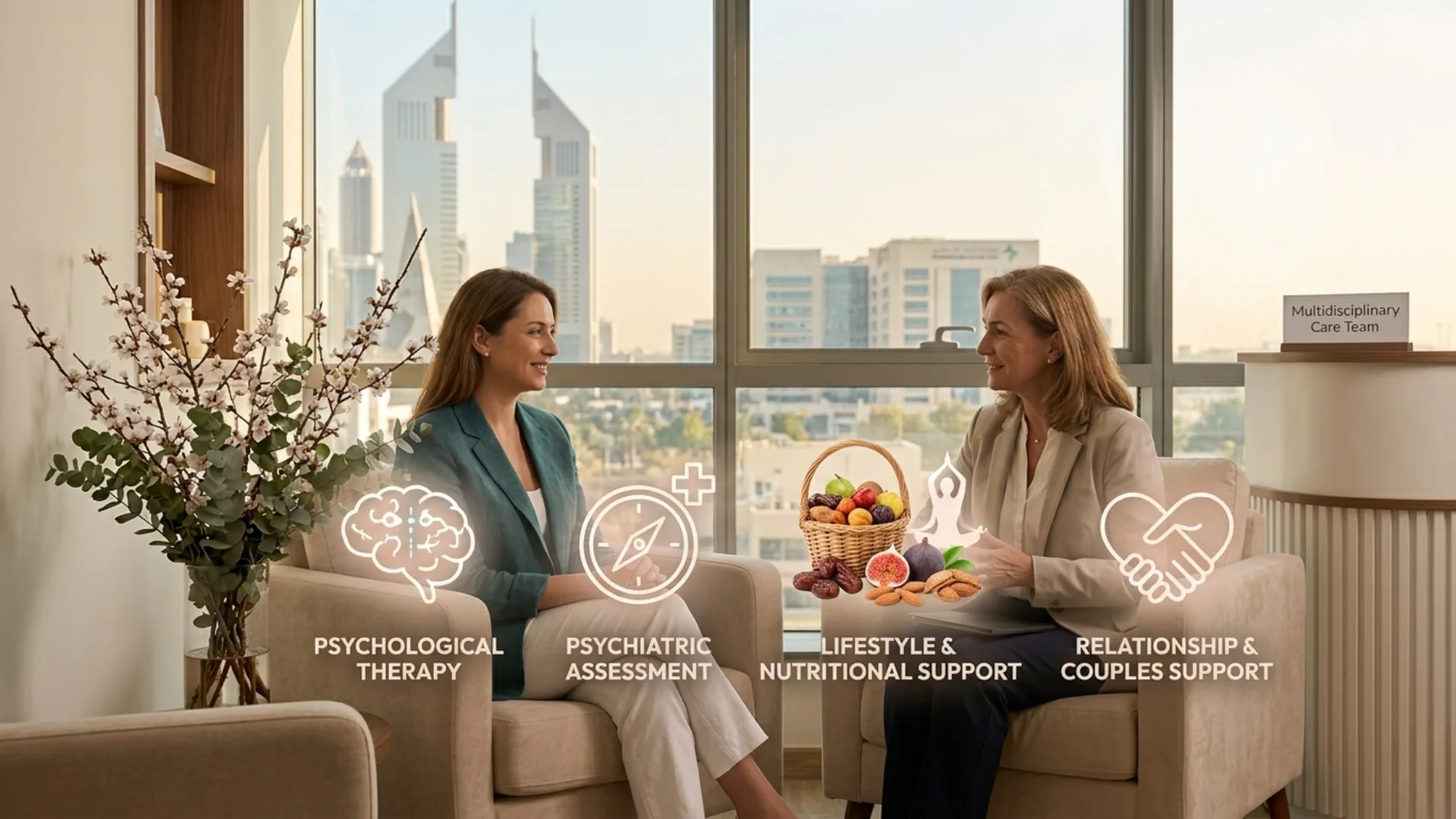
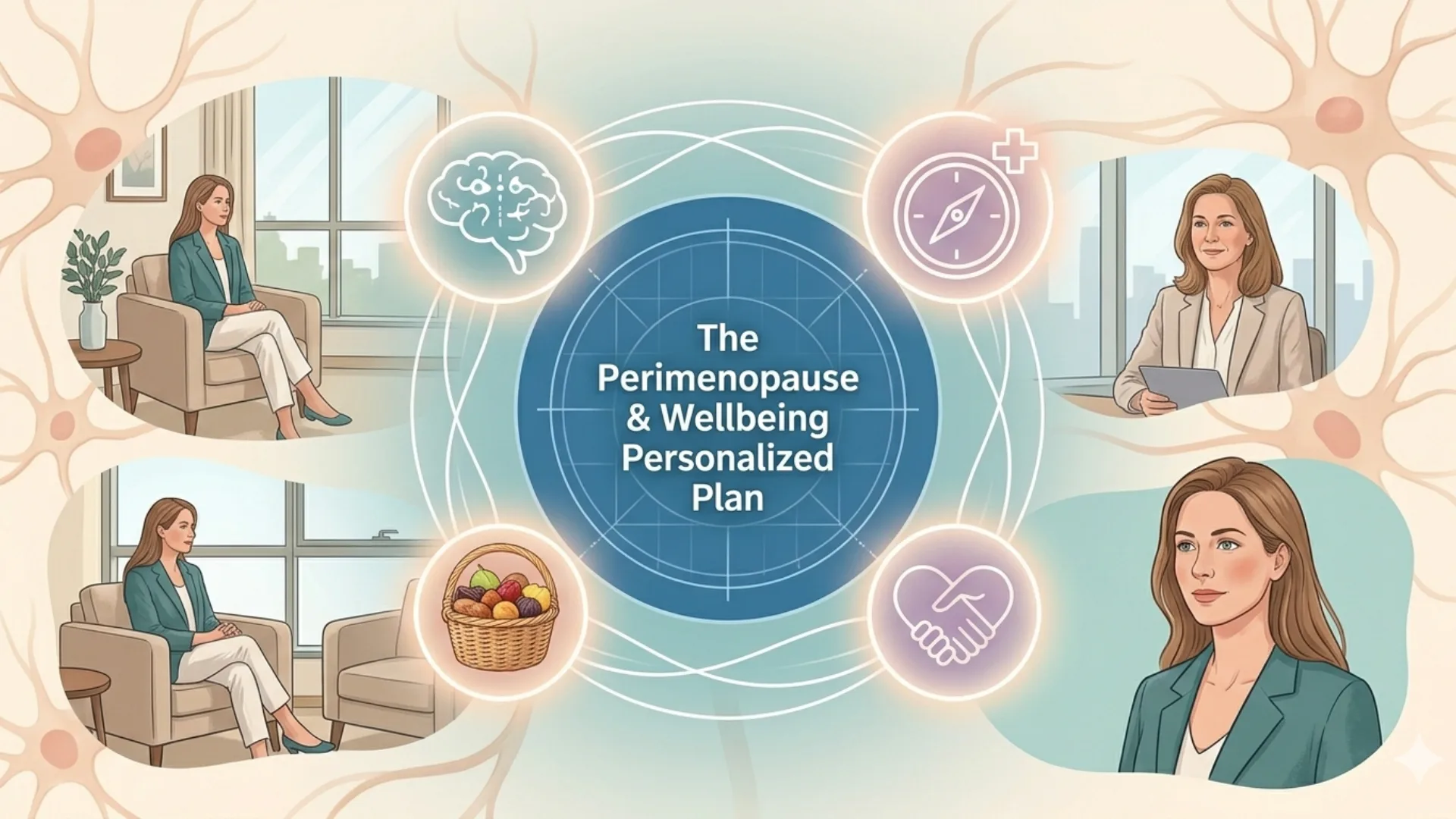
- Psychological therapy. CBT adapted for perimenopausal presentations addresses the anxiety and mood symptoms directly — building coping strategies, restructuring unhelpful thought patterns, and reducing the behavioural avoidance that anxiety and depression tend to generate. ACT (Acceptance and Commitment Therapy) is particularly effective for the loss of identity and purpose that some women experience during this transition.
- Psychiatric assessment. For women whose symptoms are severe, or where psychological therapy alone is not producing sufficient improvement, a psychiatric consultation can determine whether medication — antidepressants, hormone replacement therapy in conjunction with a gynaecologist, or other options — is clinically indicated. Our psychiatrist works alongside our psychologists, not in isolation from them.
- Lifestyle and nutritional support. Sleep, exercise, nutrition, and stress management all have measurable effects on hormonal balance and mood during perimenopause. Our wellbeing team can offer structured support in these areas alongside clinical treatment.
- Relationship and couples support. Perimenopause affects relationships. The emotional intensity, sleep disruption, and changed sense of self that characterise this transition can create significant strain between partners who do not have a shared language to understand what is happening. Couples therapy during this period can be genuinely transformative.
A Note on Seeking Help in Dubai as a Woman
Dubai is home to women from dozens of cultural backgrounds, each with their own inherited frameworks around women’s health, emotional expression, and the appropriateness of seeking professional support. For many, there is an additional layer of complexity: being far from family support networks, managing the particular pressures of expat life, or carrying cultures in which mental health is not openly discussed.
We see all of this with respect. Our clinicians work across cultures, speak multiple languages between them, and understand that the decision to seek support — particularly for something as intimate as mental health during a significant life transition — is rarely taken lightly.
When to Seek Help: A Practical Guide
You do not need to tick every box to warrant professional support. If any of the following is true, a conversation with a psychologist is worth having:
- You have noticed a significant change in your mood, anxiety levels, or emotional reactivity in your 40s or early 50s that you cannot fully explain
- You are sleeping poorly and it is affecting your day-to-day functioning
- You are experiencing anxiety or depression that has not responded fully to previous treatment
- You feel like you are not quite yourself — and have done for some months
- You are managing these experiences largely alone, and it is taking an increasing toll
- You are a couple and perimenopause is creating distance or conflict that you do not have the tools to navigate
Any one of these is a sufficient reason to reach out. You do not need a crisis. You need care
We would be glad to support you.
Book a consultation with our wellbeing team → almondblossoms.care
contact +971 4 709 3555
About Almond Blossoms:
Almond Blossoms Wellbeing Center is a DHA-licensed multidisciplinary mental health and fertility center in Dubai Health Care City. We offer evidence-based psychological and psychiatric care for individuals, couples, and families—with particular expertise in women’s mental health, fertility-related emotional well-being, anxiety, depression, and life transitions