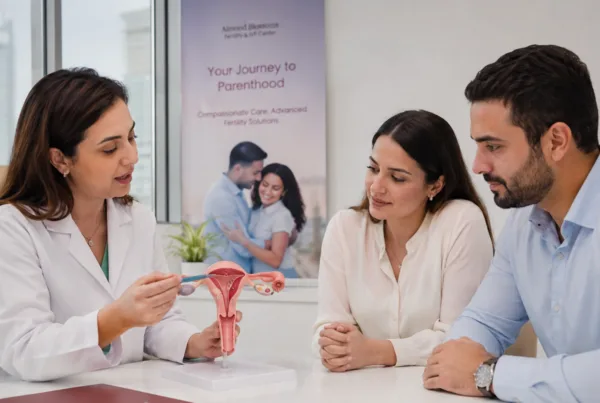
If conversations with your spouse often turn into arguments, silence, or misunderstandings, you may be wondering how to improve communication in a marriage. Better communication is not about finding perfect words. It is about learning to listen, express needs clearly, and create enough emotional safety for both partners to be heard.
Communication can become especially difficult when couples are dealing with work pressure, family responsibilities, financial concerns, infertility, or fertility treatment. These pressures can intensify existing relationship problems and make even small disagreements feel overwhelming.
The good news is that healthier communication can be learned and practiced. The goal is not to eliminate every disagreement, but to handle difficult conversations in ways that protect respect, trust, and connection. The Almond Blossoms notes that regular communication, listening to your partner’s perspective, and constructive approaches to disagreement can support healthier relationships.
Why Communication Problems Happen in Marriage
Communication problems rarely come from one conversation alone. They often develop through repeated patterns between partners.
For example, one partner may feel ignored and become more persistent, while the other feels criticized and withdraws. The more one pushes, the more the other pulls away. Eventually, both partners may feel misunderstood.
Common causes of communication difficulties include:
- Stress from work or financial responsibilities
- Different expectations about marriage or family life
- Parenting responsibilities
- Unresolved disagreements
- Lack of quality time together
- Difficulty expressing emotions
- Fear of criticism or rejection
- Repeated arguments about the same issue
- Infertility or fertility treatment
- Previous emotional hurts or breaches of trust
Fertility challenges can add another layer of pressure. Partners may experience anxiety, disappointment, guilt, grief, or uncertainty differently. One person may want to talk about treatment constantly while the other prefers to avoid the subject.
Neither response automatically means that a partner does not care. It may mean that each person is coping with stress differently.

How to Improve Communication in a Marriage
If you want to improve communication in a marriage, focus less on winning an argument and more on understanding what is happening between you.
1. Choose the right time to talk
Important conversations are more productive when both partners have enough emotional space to participate.
Instead of starting a serious conversation when one of you is exhausted, rushing to work, or already angry, try asking:
“Is now a good time to talk about something important?”
If the answer is no, agree on another time rather than allowing the issue to disappear.
Timing does not solve a relationship problem by itself, but it can prevent an already difficult conversation from escalating unnecessarily.
2. Listen to understand, not to respond
Many relationship problems become worse because partners are preparing their response while the other person is still talking.
Try giving your spouse your full attention. Put away your phone, avoid interrupting, and ask a follow-up question before explaining your own position.
You might say:
- “Can you help me understand what you mean?”
- “What was the hardest part for you?”
- “Did I understand you correctly?”
- “What do you need from me right now?”
The fertility and well-being highlights the value of follow-up questions and genuine listening in creating stronger conversations.
Listening does not mean agreeing with everything your partner says. It means making an effort to understand their experience before responding.
3. Talk about your feelings without attacking
When emotions are high, statements beginning with “You always” or “You never” can quickly sound like accusations.
Instead, describe the situation and your experience.
For example:
Instead of:
“You never listen to me.”
Try:
“I feel dismissed when I am talking, and the conversation changes before I finish.”
This approach gives your partner something specific to understand rather than something they immediately need to defend.
4. Discuss one issue at a time
A disagreement about household responsibilities can quickly become a list of everything that has gone wrong over the past five years.
Try to stay with the issue currently being discussed.
If the conversation is about finances, avoid immediately bringing in parenting, intimacy, in-laws, or an argument from last month.
Addressing one concern at a time makes it easier to identify what actually needs to change.
5. Learn to pause before an argument escalates
Taking a break during an escalating disagreement can be helpful when both partners genuinely intend to return to the conversation.
You could say:
“I am getting overwhelmed. I want to continue this conversation, but I need some time to calm down.”
A pause should not become silent treatment or an indefinite withdrawal. If possible, agree on when you will return to the discussion.
The almond blossoms similarly recommends recognizing escalating anger and using a calming pause before continuing a difficult conversation.
6. Make appreciation part of everyday communication
Communication is not only about solving problems.
If most conversations with your spouse involve responsibilities, complaints, or decisions, the relationship can gradually feel like a project rather than a partnership.
Try regularly acknowledging specific things you appreciate:
- “Thank you for handling that today.”
- “I appreciated you listening to me.”
- “I noticed how much effort you put into that.”
- “I enjoyed spending that time together.”
Small expressions of appreciation can create more opportunities for positive connection.
7. Have regular relationship check-ins
You do not need to wait for a major problem before discussing your relationship.
Once a week, consider asking each other:
- “How are you feeling about us lately?”
- “Is there anything you need more of from me?”
- “Is there something we have been avoiding?”
- “What has been going well between us?”
- “How can I support you this week?”
Regular conversations can help identify concerns before they become larger relationship problems. The Almond Blossoms recommends making time for regular check-ins and discussing more than just household or parenting responsibilities.
How Can Couples Communicate Better During Fertility Treatment?
Fertility treatment can create relationship pressure even when a couple normally communicates well.
Appointments, investigations, medication schedules, treatment decisions, financial considerations, and uncertainty about outcomes can all become emotionally demanding.
For couples considering IVF, ICSI, IUI, egg freezing, or other fertility treatments, communication becomes particularly important because partners may not experience the process in the same way.
Talk about emotions, not only treatment decisions
It is easy for conversations to become focused entirely on practical questions:
“Which appointment is next?”
“What did the doctor say?”
“How much will the treatment cost?”
“Should we continue?”
These conversations are necessary, but emotional check-ins matter too.
Ask your partner:
“How are you actually feeling about everything?”
You may discover that one partner is frightened while the other is trying to remain optimistic. Giving both people space to express those feelings can reduce isolation.
Avoid assuming your partner feels the same way
One partner may want to move quickly toward treatment, while the other may need more time.
One may experience infertility as a medical problem to solve. Another may experience it as grief, uncertainty, or a threat to their expectations for the future.
There is no requirement for both partners to process the experience in the same way.
If fertility decisions are creating significant tension, speaking with a psychologist or fertility counselor can provide a structured environment for discussing difficult emotions and decisions.
Almond Blossoms provides integrated fertility and psychological support, with fertility specialists and mental health professionals working within the same care setting in Dubai Healthcare City.
What Are the Signs of Unhealthy Communication?
Not every disagreement means there is a serious relationship problem. Conflict is a normal part of close relationships.
However, recurring communication patterns can indicate that additional support may be useful.
You may benefit from professional support if:
- The same argument happens repeatedly without resolution.
- One or both partners regularly shut down during conversations.
- Conversations quickly become hostile or highly emotional.
- You avoid important subjects because you expect an argument.
- You feel consistently unheard or misunderstood.
- Trust has been damaged and is difficult to rebuild.
- Fertility treatment is creating significant emotional or relationship strain.
- You no longer know how to discuss difficult subjects constructively.
Couples therapy is not necessarily about deciding who is right or wrong. A psychologist can help identify communication patterns, facilitate difficult conversations, and teach strategies for addressing relationship concerns.
Almond Blossoms’ Well-being Centre specifically provides psychological support for relationship and interpersonal difficulties, including support for individuals and couples.
When communication problems feel connected to deeper issues
Sometimes communication is only the visible part of a larger problem.
For example, repeated arguments may be connected to:
- Anxiety
- Depression
- Infertility-related distress
- Previous relationship experiences
- Grief or loss
- Major life transitions
- Difficulty managing stress
In these situations, simply telling a couple to “communicate better” may not address the underlying issue.
A psychologist can help you understand the emotional patterns affecting communication and determine what type of support may be appropriate.
How Couples Therapy Can Help With Relationship Problems
Couples therapy provides a structured setting where both partners can discuss relationship concerns with guidance from a trained professional.
A psychologist may help couples:
- Identify recurring communication patterns
- Improve active listening
- Express difficult emotions more clearly
- Understand each other’s perspectives
- Reduce destructive conflict patterns
- Rebuild trust after relationship difficulties
- Improve emotional connection
- Navigate major shared decisions
- Cope with fertility-related stress
Almond Blossoms offers individual and couples therapy as part of its broader fertility and well-being services. Its fertility-focused therapy approach is designed to support emotional wellbeing during fertility treatment, including situations involving tension or communication breakdown between partners.
For couples in Dubai who are simultaneously navigating relationship concerns and fertility treatment, having psychological and reproductive care available within one integrated setting can make it easier to address both sides of the experience.
When Should You Speak to a Psychologist?
You do not have to wait until a relationship reaches a crisis before seeking professional support.
A psychologist may be appropriate when communication difficulties are persistent, emotionally exhausting, or affecting your ability to make decisions together.
Professional support may be particularly relevant if you are experiencing relationship problems alongside fertility concerns.
At Almond Blossoms, psychologists support individuals and couples with relationship difficulties, infertility-related concerns, anxiety, stress, and other emotional challenges.
Seeking help does not automatically mean that your relationship is failing. It can simply mean that the current communication pattern is not working and you would like professional guidance to change it.
If you are undergoing or considering fertility treatment, this support can also help you discuss sensitive subjects such as treatment expectations, emotional reactions, family planning, and the impact of fertility challenges on your relationship.
Conclusion
Learning how to improve communication in a marriage is not about avoiding every disagreement. It is about creating healthier ways to talk when disagreements happen.
Start with small changes: listen before responding, ask rather than assume, speak about your feelings without blame, make space for appreciation, and check in with each other regularly.
If marriage problems or relationship problems have become difficult to manage, particularly alongside fertility concerns, professional psychological support can provide a structured space to work through them.
For couples in Dubai Healthcare City who are considering fertility treatment or already navigating their fertility journey, Almond Blossoms combines reproductive medicine with psychological and relationship support.
Book a consultation with Almond Blossoms to discuss your fertility and emotional wellbeing needs.
A Consultation in Dubai
→ Website
Frequently Asked Questions (FAQs)
How can I improve communication in my marriage?
Start by choosing appropriate times for difficult conversations, listening without interrupting, expressing your feelings without blame, discussing one issue at a time, and regularly checking in with your partner.
What causes communication problems in marriage?
Communication problems can be associated with stress, unresolved conflict, different expectations, emotional difficulties, lack of quality time, trust issues, and major life events such as infertility or fertility treatment.
How do I communicate with my spouse without starting an argument?
Choose a calm time, describe your feelings and specific concerns rather than attacking your partner, ask questions to understand their perspective, and take a pause if the conversation becomes too heated.
Can a psychologist help with marriage problems?
Yes. A psychologist can help couples understand recurring communication patterns, improve listening and emotional expression, and work through relationship or interpersonal difficulties in a structured setting.
Can fertility treatment affect a relationship?
Fertility treatment can be emotionally demanding and may create additional stress for couples. Partners may experience uncertainty, disappointment, anxiety, or treatment-related pressure differently. Psychological or couples support can help couples navigate these challenges together.