Polycystic Ovary Syndrome (PCOS), now renamed Polyendocrine Metabolic Ovarian Syndrome (PMOS), is a common hormonal and metabolic condition affecting women during their reproductive years. It can influence menstrual cycles, ovulation, skin health, metabolism, and fertility. For women planning pregnancy, understanding the condition and seeking appropriate medical guidance can make an important difference.
Although the terminology has changed, many women still recognise the condition as PCOS. Both terms refer to the same condition. The updated name highlights its wider effects on hormonal and metabolic health rather than focusing only on the appearance of the ovaries.
At Almond Blossoms Fertility & Wellbeing Center in Dubai Healthcare City, we understand that hormonal health and fertility are closely connected. Our approach brings together fertility assessment, reproductive treatment, and psychological wellbeing support to help women understand their options and plan their next steps.
What Is PMOS (Formerly Known as PCOS)?
Polyendocrine Metabolic Ovarian Syndrome (PMOS), previously known as Polycystic Ovary Syndrome (PCOS), is a complex hormonal and metabolic condition that can affect ovulation and reproductive health.
The name was updated following an international consensus process published in The Lancet on May 12, 2026. Researchers and healthcare professionals supported the change because the older name placed too much emphasis on ovarian cysts, which are not present in every woman with the condition.
The updated name highlights three important aspects:
- Polyendocrine: Involvement of multiple hormone-related systems.
- Metabolic: Connections with insulin function and metabolic health.
- Ovarian: Effects on ovarian function, follicle development, and ovulation.
The change in terminology does not mean that women previously diagnosed with PCOS need a completely new diagnosis. It is the same underlying condition, with a name that better reflects its broader effects.
Is PMOS Different From PCOS?
No. PMOS is the updated name for the condition previously called PCOS.
The medical condition itself has not suddenly changed because of the new terminology. Women who already have a PCOS diagnosis should not assume that their diagnosis or treatment needs to start again.
Because PCOS remains widely used in patient information, medical records, and online searches, both terms are useful when discussing the condition.
What Are the Common Symptoms of PMOS or PCOS?
Symptoms can vary considerably between women. Some experience noticeable menstrual and skin changes, while others discover the condition during fertility investigations.
Common symptoms include:
1. Irregular Menstrual Periods
Infrequent, unpredictable, or absent periods may indicate irregular ovulation. Women with PCOS may have longer menstrual cycles because eggs are not released regularly.
2. Excess Facial or Body Hair
Higher androgen levels can contribute to unwanted hair growth on the face, chin, chest, or abdomen. This symptom is medically known as hirsutism.
3. Acne and Oily Skin
Hormonal changes may increase oil production in the skin, contributing to persistent acne, particularly around the face, jawline, and back.
4. Hair Thinning
Some women experience thinning hair on the scalp due to increased sensitivity to androgens.
5. Weight and Metabolic Changes
Some women with PCOS experience weight gain or difficulty managing their weight. Insulin resistance may contribute to metabolic changes, although PCOS can also affect women who are not overweight.
6. Difficulty Conceiving
Irregular or absent ovulation can make it harder to predict the fertile window and achieve pregnancy naturally.
7. Emotional and Psychological Challenges
Living with irregular periods, visible symptoms, and fertility concerns can affect confidence, body image, and emotional wellbeing. Anxiety and depressive symptoms are also more common in women with PCOS.
Experiencing one or more symptoms does not automatically mean you have PCOS. A proper medical assessment is necessary to understand their cause.
What Causes PMOS and How Is Insulin Resistance Connected?
The exact cause of PMOS is not fully understood. However, genetic factors, hormonal regulation, and metabolic processes are believed to contribute to its development.
Insulin resistance is an important feature for many women with the condition.
Insulin is a hormone that helps the body use glucose for energy. When the body becomes less responsive to insulin, the pancreas may produce more insulin to maintain blood glucose levels.
Higher insulin levels can contribute to increased androgen production in the ovaries. This may interfere with normal follicle development and ovulation.
Other factors associated with PCOS include:
- Family history of the condition.
- Increased androgen activity.
- Changes in insulin sensitivity.
- Irregular ovarian function.
- Metabolic risk factors.
It is important to understand that PCOS is not caused simply by poor lifestyle choices or body weight. Women of different body types can develop the condition.
How Does PMOS Affect Female Fertility?
One of the most important reproductive effects of PMOS is irregular ovulation.
During a typical menstrual cycle, an ovarian follicle develops and releases a mature egg. This process is called ovulation.
In women with PCOS, hormonal imbalances can interfere with follicle development. Some follicles may begin developing without one reaching the stage required for regular egg release.
This can lead to:
- Infrequent or absent ovulation.
- Irregular menstrual cycles.
- Difficulty identifying fertile days.
- Longer time to achieve pregnancy.
- Challenges with fertility treatment planning.
However, having PCOS does not mean that pregnancy is impossible.
Many women with the condition conceive naturally or with appropriate fertility support. The right approach depends on age, ovulation patterns, ovarian health, sperm factors, and other individual considerations.
Does PCOS Affect Egg Quality?
PCOS is often associated with a higher number of small ovarian follicles and increased ovarian reserve markers. However, a higher follicle count does not automatically mean that egg quality is better.
Egg quality is influenced by several factors, including age and individual reproductive health.
For women with PCOS undergoing fertility treatment, a specialist may assess ovarian reserve, hormone levels, and other relevant factors before recommending treatment.
Read more: How to Improve Egg Quality with PCOS.
How Is PMOS Diagnosed in Dubai?
There is no single blood test that can independently confirm PCOS or PMOS.
Diagnosis generally involves a combination of medical history, physical assessment, blood tests and, when appropriate, ultrasound examination.
In adult women, established international diagnostic criteria generally require at least two of the following three features, after excluding other possible causes:
- Irregular ovulation or menstrual cycles.
- Clinical or biochemical signs of increased androgen levels.
- Polycystic ovarian morphology on ultrasound, or an appropriately used AMH assessment as an alternative in adults.
An ultrasound is not always necessary when the other diagnostic criteria are already met. AMH should not be used as a standalone diagnostic test.
Common Investigations for PCOS
Hormonal Blood Tests
Depending on symptoms and clinical history, a doctor may recommend:
- Testosterone.
- LH and FSH.
- Thyroid-stimulating hormone (TSH).
- Prolactin.
- Other androgen tests when indicated.
Pelvic Ultrasound
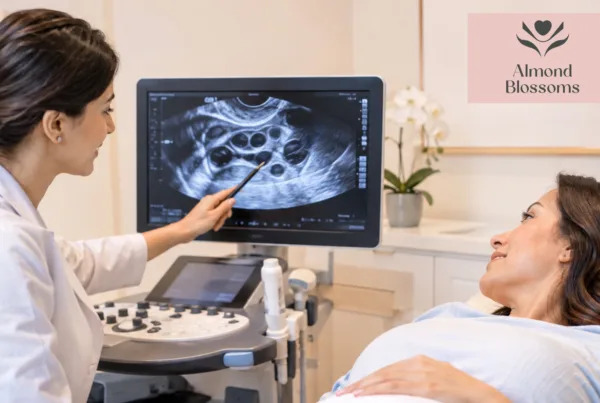
An ultrasound can help assess ovarian appearance, follicle distribution, and other reproductive structures.
AMH Assessment
Anti-Müllerian hormone may provide information about ovarian reserve and can help assess polycystic ovarian morphology in appropriate adult patients.
Metabolic Screening
A doctor may also recommend glucose testing, HbA1c, lipid profile, and blood pressure assessment to evaluate metabolic health.
The investigations required will depend on each woman’s symptoms and medical history.
What Are the Treatment Options for PMOS in Dubai?
There is no single treatment that works for every woman with PMOS. Management depends on symptoms, metabolic health, menstrual patterns, and whether the patient is planning pregnancy.
Some women primarily need help regulating their menstrual cycles and managing hormonal symptoms. Others may need fertility treatment because they are experiencing irregular or absent ovulation.
1. Lifestyle and Nutritional Management
Healthy lifestyle habits can support metabolic health and overall wellbeing in women with PCOS.
A personalised approach may include:
- Eating a balanced diet with vegetables, whole grains, protein, and healthy fats.
- Maintaining regular physical activity.
- Getting sufficient sleep.
- Supporting a healthy relationship with food.
- Managing stress and maintaining sustainable routines.
There is no single diet proven to be best for every woman with PCOS. Lifestyle recommendations should be practical and adapted to individual needs rather than based on restrictive diets or unrealistic weight-loss expectations.
2. Medication for Hormonal and Metabolic Symptoms
Depending on the patient’s symptoms and medical history, a doctor may recommend medication to address specific aspects of PCOS.
Examples include:
- Hormonal contraceptive medication to manage irregular periods and androgen-related symptoms when pregnancy is not currently desired.
- Metformin for selected metabolic indications, particularly insulin resistance.
- Other prescribed treatments for specific symptoms, where appropriate.
Medication should always be selected by a qualified healthcare professional. The treatment used for a woman planning pregnancy may differ from the treatment used by someone who is not trying to conceive.
3. Ovulation Induction Treatment
For women experiencing infertility due to irregular or absent ovulation, ovulation induction may be considered.
This treatment uses medication to encourage the development of an ovarian follicle and the release of an egg.
Letrozole is recommended as the first-line pharmacological option for ovulation induction in women with PCOS-related anovulatory infertility when no other infertility factors are present, according to the international evidence-based guideline. Other medications may be considered depending on clinical circumstances and local prescribing requirements.
During treatment, the fertility specialist may recommend ultrasound monitoring to assess follicular development and help determine the appropriate timing of treatment.
Learn more: Ovulation Induction Treatment.
4. Intrauterine Insemination (IUI)
IUI may be considered for selected women with PCOS who require fertility assistance and meet the relevant clinical criteria.
During IUI treatment:
- The fertility specialist assesses the patient’s menstrual and ovulation patterns.
- Medication may be prescribed to support follicle development.
- Ultrasound monitoring may be used to follow the treatment cycle.
- A prepared sperm sample is placed directly into the uterus around ovulation.
IUI suitability also depends on factors such as fallopian tube health and sperm quality.
It is not automatically necessary for every woman with PCOS. A fertility assessment helps determine whether IUI or another approach is more appropriate.
Learn more: IUI Treatment in Dubai.
5. IVF Treatment for Women With PCOS
IVF may be considered when other fertility treatments have not been successful, when additional infertility factors are present, or when there is another clinical indication for assisted reproduction.
The process generally involves:
- Ovarian stimulation using prescribed medication.
- Monitoring follicular development.
- Egg retrieval.
- Fertilisation using IVF or ICSI when appropriate.
- Embryo culture and assessment.
- Embryo transfer or freezing, depending on the treatment plan.
Women with PCOS may respond strongly to ovarian stimulation, so the fertility specialist needs to consider the risk of ovarian hyperstimulation syndrome (OHSS).
Individualised stimulation protocols and appropriate monitoring can help reduce this risk. The choice of fresh or frozen embryo transfer will depend on clinical findings.
Learn more: IVF and ICSI Treatment in Dubai.
Can Women With PMOS Get Pregnant Naturally?
Yes. Many women with PCOS conceive naturally, although irregular ovulation can make conception less predictable.
Some women may improve their menstrual regularity through appropriate lifestyle changes and management of underlying metabolic concerns.
Others may benefit from ovulation induction or additional fertility treatment.
If pregnancy has not occurred after trying for an appropriate period, a fertility assessment can help identify whether PCOS is the main concern or whether other factors are contributing.
A diagnosis of PCOS should never be treated as a prediction that a woman cannot become a mother.
What Are the Long-Term Health Risks Associated With PMOS?
PMOS is not only a reproductive health condition. It is also associated with metabolic and psychological health considerations.
Long-term health concerns may include:
Type 2 Diabetes: Women with PCOS have an increased risk of impaired glucose regulation and type 2 diabetes.
Cardiovascular Risk Factors: Blood pressure and cholesterol abnormalities may occur more frequently.
Endometrial Health: Prolonged periods without ovulation can lead to ongoing exposure of the uterine lining to oestrogen without sufficient progesterone. This can increase the risk of endometrial hyperplasia.
Sleep Apnoea: Some women, particularly those with additional metabolic risk factors, may have an increased risk of sleep-related breathing problems.
Mental Health Concerns: Anxiety, depression, eating disorders and body-image difficulties are important aspects of PCOS care.
The international guideline recommends considering reproductive, metabolic, cardiovascular, sleep and psychological health throughout a woman’s life.
PMOS and Emotional Wellbeing: Why Psychological Support Matters
Living with PCOS can be emotionally challenging, particularly when symptoms affect appearance, menstrual health and the ability to conceive.
Some women experience frustration due to unpredictable periods, acne, unwanted hair growth, or changes in body weight. Others may feel anxious about their fertility or worried about future pregnancy plans.
These experiences deserve attention and compassionate support.
At Almond Blossoms Fertility & Wellbeing Center, psychological wellbeing is an important part of our integrated approach to care.
Depending on individual needs, psychological support may help women with:
- Anxiety associated with fertility concerns.
- Emotional stress related to hormonal symptoms.
- Body-image and self-confidence difficulties.
- Relationship challenges during fertility treatment.
- Depression and persistent low mood.
- Coping with uncertainty during IVF or other fertility procedures.
Psychological support does not replace medical treatment for PMOS. Instead, it complements reproductive care by addressing the emotional challenges that may accompany the condition.
Why Choose Almond Blossoms for PCOS-Related Fertility Care in Dubai?
At Almond Blossoms Fertility & Wellbeing Center, we understand that PCOS can affect different aspects of a woman’s reproductive and emotional health.
Located in Dubai Healthcare City, our centre brings together fertility specialists, reproductive medicine services, and psychological wellbeing support.
Our fertility services include:
- Hormonal evaluation and fertility assessment.
- Ovulation induction.
- IVF and ICSI.
- IUI.
- Egg and embryo freezing.
- Genetic testing.
- Fertility counselling and psychological support.
Our approach focuses on understanding each patient’s individual concerns before discussing suitable investigations and treatment options.
Whether you are experiencing irregular periods, concerns about ovulation, or difficulty conceiving, a consultation can help you understand the next steps.
Start Your PCOS and Fertility Care Journey With Almond Blossoms
A diagnosis of PCOS or PMOS does not mean you have to face fertility concerns alone. Understanding your hormonal health, identifying possible ovulation problems, and exploring appropriate treatment options can help you make informed decisions about your reproductive future.
At Almond Blossoms Fertility & Wellbeing Center in Dubai Healthcare City, we bring together fertility expertise and psychological wellbeing support to provide compassionate, individualised care.
Whether you are seeking a PCOS assessment, experiencing irregular periods, or planning pregnancy, our team can help you explore the next steps.
Book a Consultation with Almond Blossoms Fertility & Wellbeing Center.
Frequently Asked Questions About PCOS and PMOS
What is the new name for PCOS?
PCOS has been renamed Polyendocrine Metabolic Ovarian Syndrome (PMOS) following an international consensus published in The Lancet in May 2026. Both terms refer to the same condition.
What are the first signs of PCOS?
Common early signs include irregular menstrual periods, acne, excess facial or body hair, scalp hair thinning, and difficulty conceiving. Symptoms differ between women, and medical assessment is needed for diagnosis.
Can PCOS cause infertility?
PCOS can affect fertility by interfering with regular ovulation. However, many women with the condition conceive naturally or with appropriate fertility treatment.
How is PCOS diagnosed in Dubai?
Diagnosis involves reviewing menstrual history, assessing androgen-related symptoms, relevant blood tests, and sometimes pelvic ultrasound. A fertility specialist may also recommend metabolic screening.
A Consultation in Dubai
→ Website