Risk Factors and Treatment Options
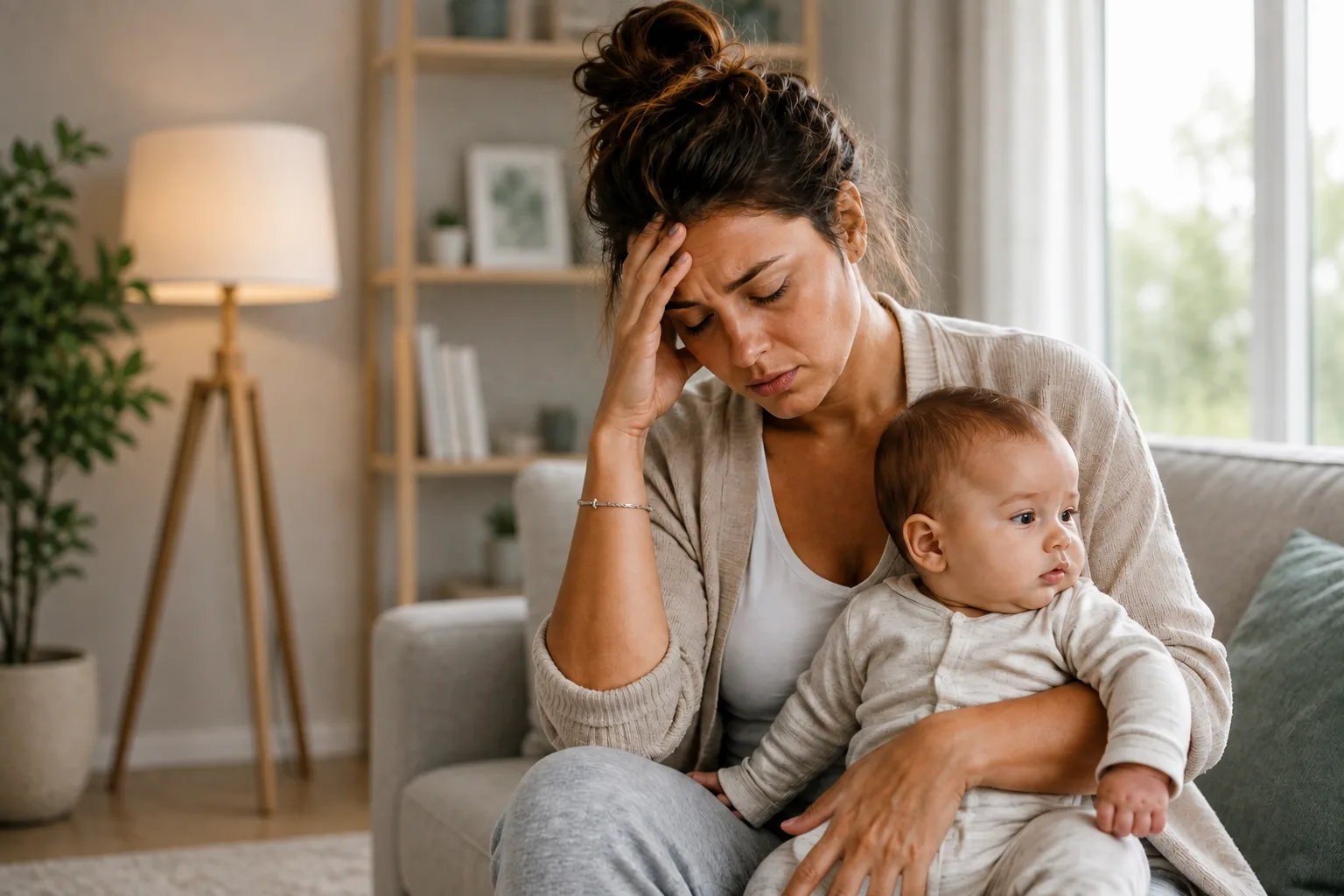
If you feel persistently sad, anxious, overwhelmed, disconnected, or unable to cope after having a baby, you may be experiencing postpartum depression. It is more than the temporary “baby blues” and can happen even when you deeply love your baby. Recognising the signs early can help you access appropriate support and treatment.
Key Takeaways
- Postpartum depression can develop during pregnancy or after childbirth and may affect your mood, sleep, relationships, and ability to cope.
- It is not a sign that you are a bad parent, and it is treatable.
- Psychological therapy, practical support, and, when appropriate, medication can form part of treatment.
What Is Postpartum Depression?
Postpartum depression (PPD), also called postnatal depression, is a type of depression that can occur during pregnancy or after giving birth. Although it is commonly associated with the first few months after childbirth, symptoms can begin later during the first year after having a baby.
Postpartum depression is different from the short-lived emotional changes commonly called the baby blues.
The baby blues may involve tearfulness, irritability, anxiety, or feeling emotionally overwhelmed during the first days after birth. These feelings generally improve within about two weeks.
Postpartum depression tends to be more persistent, may become worse over time, and can significantly affect your everyday functioning.
Importantly, postpartum depression is not a reflection of your ability to be a parent. You can love your baby and still experience depression.
It can also affect fathers and partners, meaning that postpartum mental health deserves attention across the whole family.
Can postpartum depression start during pregnancy?
Yes. Depression can begin during pregnancy and continue after childbirth. This is sometimes called antenatal depression.
If depression develops during pregnancy, getting appropriate support before delivery may help prevent symptoms from becoming more severe after the baby arrives.

What Are the Symptoms of Postpartum Depression?
The symptoms of postpartum depression can vary from person to person. You do not need to experience every symptom to benefit from professional assessment.
Common signs may include:
- Persistent sadness or low mood
- Frequent crying or feeling emotionally overwhelmed
- Loss of interest or pleasure in activities you previously enjoyed
- Feeling hopeless, helpless, guilty, or worthless
- Excessive worry or anxiety
- Irritability or anger
- Feeling unable to cope with everyday responsibilities
- Difficulty sleeping, even when your baby is sleeping
- Changes in appetite
- Low energy or persistent exhaustion
- Difficulty concentrating or making decisions
- Withdrawing from friends, family, or your partner
- Feeling disconnected from your baby
- Difficulty bonding with your baby
- Frightening thoughts about yourself or your baby
One particularly important point is that sleep deprivation alone does not explain every emotional difficulty after childbirth.
New parents naturally experience disrupted sleep. However, if you remain persistently low, anxious, hopeless, disconnected, or unable to function even when you have opportunities to rest, it is worth speaking with a healthcare professional.
Is difficulty bonding with your baby a sign of postpartum depression?
It can be.
Some parents experiencing postpartum depression describe feeling emotionally disconnected from their baby or guilty because they do not feel the immediate bond they expected.
This does not mean you are a bad parent. Depression can affect emotions, motivation, attachment, and the ability to experience pleasure.
Professional psychological support can help you understand what you are experiencing without judgment.
What Causes Postpartum Depression?
There is no single cause of postpartum depression. It can develop through a combination of biological, psychological, emotional, and social factors.
Hormonal and physical changes following pregnancy may play a role, while the demands of caring for a newborn, sleep disruption, relationship difficulties, and stressful life circumstances can also contribute.
Hormonal and physical changes
Pregnancy and childbirth involve major physical changes. Hormone levels change significantly around pregnancy and after delivery, while recovery from childbirth can involve pain, fatigue, and other physical challenges.
These changes may interact with psychological and environmental factors rather than acting as a single explanation for depression.
Sleep deprivation and exhaustion
Newborn care can dramatically change your sleep routine.
Repeated night waking and ongoing exhaustion can make it harder to regulate emotions, concentrate, manage stress, and maintain relationships.
Sleep disruption alone does not mean you have postpartum depression, but persistent exhaustion can contribute to emotional difficulties.
Emotional and psychological pressures
You may experience pressure to feel happy and grateful after having a baby.
When your experience includes anxiety, sadness, anger, guilt, or uncertainty, the difference between expectations and reality can become emotionally difficult.
For parents who have already experienced depression or anxiety, the transition to parenthood may feel particularly challenging.
Fertility treatment and the emotional transition to parenthood
For some couples, pregnancy follows months or years of fertility treatment.
After navigating IVF (in vitro fertilisation), ICSI (a fertility treatment in which a single sperm is injected directly into an egg), IUI (intrauterine insemination), pregnancy monitoring, or previous pregnancy loss, reaching childbirth can bring enormous relief, but it does not automatically remove emotional stress.
Some parents may even feel pressure to be constantly grateful after a difficult fertility journey.
If you are struggling emotionally after a long-awaited pregnancy, those feelings deserve professional attention too.
Who Is at Higher Risk of Postpartum Depression?
Postpartum depression can affect anyone after having a baby. Having one or more risk factors does not mean you will develop it, while having no obvious risk factors does not guarantee that you will not.
Factors associated with a higher risk include:
- A previous history of depression or another mental health condition
- Depression or anxiety during pregnancy
- Limited emotional or practical support
- Relationship difficulties
- Major recent stressful events
- Domestic abuse or trauma
- Having a premature or unwell baby
- Challenges associated with caring for more than one baby
- Feeling isolated from family or friends.
Does fertility treatment increase the risk of postpartum depression?
A history of fertility treatment does not mean you will develop postpartum depression.
However, fertility treatment can be emotionally demanding. Some people experience prolonged uncertainty, repeated treatment cycles, pregnancy loss, fear during pregnancy, or anxiety about the baby’s health.
For this reason, mental wellbeing should be considered alongside physical fertility care, particularly for people who have already experienced significant emotional stress.
At Almond Blossoms, fertility care and psychological support are brought together so that emotional concerns can be discussed as part of the wider reproductive journey.
How Is Postpartum Depression Treated?
The right treatment depends on the severity of symptoms, your circumstances, medical history, preferences, and whether you are breastfeeding.
A healthcare professional may assess your symptoms and discuss appropriate treatment options rather than relying on a single approach.
Psychological therapy
Talking therapies are an important treatment option for postpartum depression.
Depending on your needs, therapy may help you:
- Understand difficult emotions
- Identify unhelpful thought patterns
- Develop healthier coping strategies
- Manage anxiety and overwhelming thoughts
- Improve communication with your partner
- Work through difficult birth or fertility experiences
- Adjust to changes in identity and parenthood
Cognitive behavioural therapy (CBT) is one example of psychological therapy used for depression.
For some people, therapy may be enough. Others may benefit from therapy alongside medication.
Medication
Antidepressant medication may be considered depending on the severity of depression and individual circumstances.
If you are breastfeeding, tell your doctor. Your healthcare professional can consider treatment options that take breastfeeding and your individual medical situation into account.
You should not start, stop, or change psychiatric medication without discussing it with the appropriate medical professional.
Practical and emotional support
Treatment does not always mean medication or formal therapy alone.
Support from your partner, family, friends, and healthcare team can make daily life more manageable.
Practical support can include:
- Sharing baby-care responsibilities
- Accepting help with meals or household tasks
- Creating opportunities for rest
- Staying connected with supportive people
- Attending appropriate parent or support groups
- Speaking openly about how you are feeling
These steps are not substitutes for professional treatment when depression is significant, but they can complement appropriate care.
Integrated mental health support
Postpartum mental health can overlap with fertility history, pregnancy experiences, relationships, anxiety, and adjustment to parenthood.
An integrated approach can therefore be valuable.
At Fertility & Wellbeing Center in Dubai Healthcare City, fertility services and psychological support are available within the same broader care environment. This allows emotional wellbeing to be considered alongside reproductive healthcare rather than treated as an unrelated issue.
When Should You Seek Help for Postpartum Depression?
You do not need to wait until symptoms become severe before asking for help.
Consider speaking with a qualified healthcare professional if:
- Your low mood lasts longer than two weeks
- You are increasingly anxious or overwhelmed
- You have stopped enjoying things you normally enjoy
- You are struggling to care for yourself
- You find it difficult to function day to day
- You feel disconnected from your baby
- You are withdrawing from people around you
- Your symptoms are getting worse rather than improving
The earlier you discuss concerning symptoms, the sooner a professional can help determine what support may be appropriate.
What if you have thoughts of harming yourself or your baby?
Thoughts of suicide or harming yourself or your baby require urgent professional help.
Postpartum depression can sometimes occur alongside other serious mental health conditions. If you believe there is an immediate risk of harm to yourself or someone else, seek emergency medical assistance immediately rather than waiting for a routine appointment.
You should also seek urgent assessment if you experience hallucinations, delusions, or a severe loss of contact with reality after childbirth, as these can indicate a psychiatric emergency.
Conclusion: Postpartum Depression Is Treatable
Postpartum depression can affect your mood, relationships, confidence, sleep, and experience of early parenthood. It can develop after a straightforward pregnancy or after a long fertility journey, and experiencing it does not mean you are failing as a parent.
Most importantly, you do not have to manage it alone.
Recognising persistent symptoms and discussing them with a qualified healthcare professional can be an important first step. Treatment may include psychological therapy, practical support, medication when appropriate, or a combination tailored to your circumstances.
At Almond Blossoms Fertility & Wellbeing Center in Dubai Healthcare City, reproductive healthcare and mental wellbeing are considered together, including psychological support during the perinatal and postpartum period.
If you are experiencing symptoms of postpartum depression or would like professional support, book a consultation with the Almond Blossoms team to discuss the right next step for you.
A Consultation in Dubai
→ Website
Frequently Asked Questions (FAQs)
How long does postpartum depression last?
There is no fixed duration. Without appropriate support, symptoms can persist for months or longer. With appropriate treatment, many people improve, although recovery can take time.
What is the difference between baby blues and postpartum depression?
The baby blues are common emotional changes during the first days after childbirth and generally resolve within two weeks. Postpartum depression is more persistent, can begin later, may worsen, and can interfere significantly with daily life
Can postpartum depression happen after a happy or wanted pregnancy?
Yes. Postpartum depression is a mental health condition and is not determined by how wanted or planned the pregnancy was. You can feel grateful and excited about your baby while also experiencing depression or anxiety.
Can postpartum depression be treated without medication?
Yes. Psychological therapies such as CBT can be used to treat postpartum depression. Depending on symptom severity and individual circumstances, some people may benefit from therapy alone, while others may need medication or a combination of treatments
Can men or partners experience postpartum depression?
Yes. Fathers and partners can also experience depression after the arrival of a baby. Emotional stress, sleep disruption, relationship changes, and previous mental health difficulties can all affect parents and partners.