
Signs and symptoms of autism spectrum disorder (ASD) include challenges with social communication, repetitive behaviors, sensory sensitivities, delayed language skills, and a strong preference for strict routines.
Key points
- Autism spectrum disorder (ASD) is a developmental disability caused by differences in the brain.
- People with ASD often have problems with social communication and interaction, and restricted or repetitive behaviors or interests.
- People with ASD may also have different ways of learning, moving, or paying attention.
- It is important to note that some people without ASD might also have some of these symptoms. But for people with ASD, these characteristics can make life very challenging.
What Is Autism Spectrum Disorder?
Autism Spectrum Disorder (ASD) is a neurodevelopmental condition that affects how a person communicates, interacts with others, learns, behaves, and experiences the world.
The word “spectrum” is important. Autism does not look the same in everyone. One person may communicate fluently and live independently while experiencing significant sensory or social difficulties. Another person may need substantial daily support.
Autism is considered a lifelong developmental condition. This does not mean that a person’s abilities, challenges, or support needs remain the same throughout life. Symptoms and their impact can change as a person develops and encounters different environments and expectations.
What causes autism?
There is no single cause of autism. It is understood to involve differences in brain development and multiple genetic and developmental factors.
Importantly, autism is not caused by poor parenting, and simply noticing one or two autistic traits does not mean that you or your child is autistic.
A proper assessment considers a person’s overall developmental history, communication, behavior, and daily functioning.
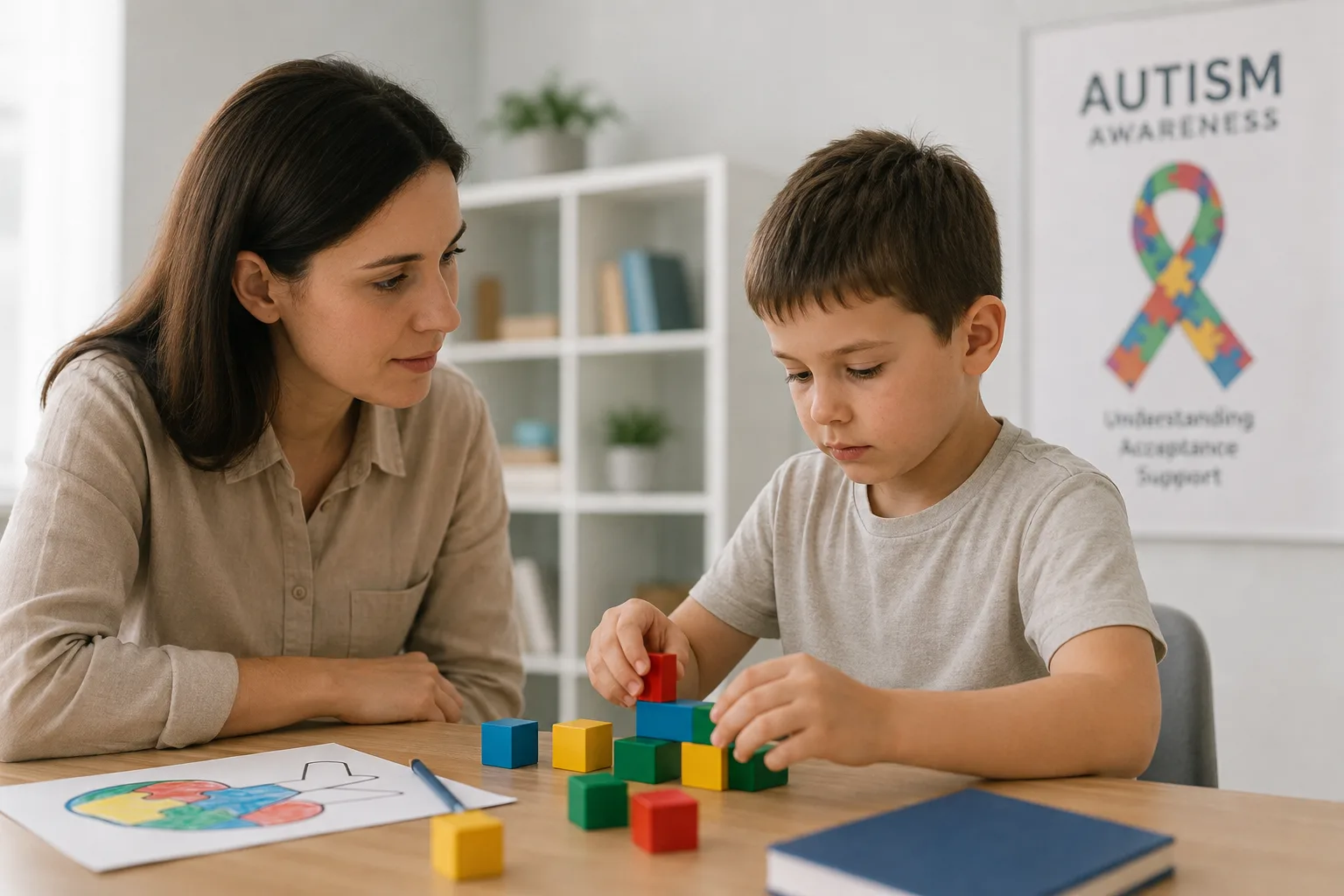
What Are the Signs and Symptoms of Autism Spectrum Disorder?
The signs of Autism Spectrum Disorder generally fall into two broad areas:
- Differences in social communication and interaction
- Restricted, repetitive behaviors, interests, or patterns of behavior
Not every autistic person will have every characteristic. The presentation can also vary according to age, developmental stage, communication abilities, and individual circumstances.
1. Differences in social communication
You may notice difficulties such as:
- Limited or inconsistent eye contact
- Difficulty understanding facial expressions or body language
- Difficulty starting or maintaining conversations
- Trouble understanding sarcasm, implied meanings, or social cues
- Appearing not to respond when their name is called
- Difficulty sharing interests or experiences with others
- Finding social situations confusing or exhausting
- Preferring to communicate in a very direct or literal way
For young children, developmental differences may include limited gestures, delayed language, difficulty with interactive play, or difficulty joining other children in play.
However, these characteristics should always be considered in the context of the person’s age and overall development.
2. Repetitive behaviors and strong preferences for routine
Another group of signs can involve repetitive behaviors or a strong preference for predictability.
Examples may include:
- Repeating words or phrases
- Repetitive movements such as hand flapping or rocking
- Arranging objects in a particular order
- Becoming distressed when routines change
- Having highly focused or intense interests
- Repeating the same play pattern
- Becoming very interested in specific parts of objects
- Finding unexpected changes particularly difficult
These behaviors can provide comfort or help a person regulate themselves, rather than simply being “bad behavior.”
3. Sensory differences
Some autistic people experience the senses differently.
For example, you may notice an unusually strong or reduced response to:
- Loud sounds
- Bright lights
- Certain textures
- Smells
- Tastes
- Physical touch
- Crowded environments
A child may become overwhelmed by sounds that other people barely notice. An adult may find busy workplaces, shopping centers, or social gatherings particularly difficult.
Sensory differences are common in autism, but they can also occur in people who are not autistic. Therefore, they are not enough on their own to establish a diagnosis.
People Also Ask: Is Everyone on the Spectrum?
No, not everyone is on the autism spectrum.
Many people may recognize individual traits that overlap with autism. For example, you might prefer routines, dislike loud noises, enjoy spending time alone, or become deeply interested in particular subjects.
Having one or several of these characteristics does not automatically mean you have Autism Spectrum Disorder.
The term “spectrum” describes the wide range of characteristics and support needs among autistic people. It does not mean that everyone falls somewhere on a scale from “not autistic” to “very autistic.”
A professional evaluation looks at whether a broader pattern of developmental and behavioral characteristics is present and whether those characteristics affect everyday functioning.
Can adults be autistic without knowing it?
Yes. Some adults are diagnosed later in life, particularly when their characteristics were subtle during childhood or when they developed strategies to manage social situations.
Adults may have learned to consciously copy social behaviors, rehearse conversations, follow strict routines, or avoid situations they find overwhelming.
This can sometimes make autism less obvious to other people.
Adults seeking an evaluation may be assessed by a psychologist, psychiatrist, neuropsychologist, or another appropriately trained professional with experience in autism. Developmental history can be particularly useful when evaluating adults.
Does Autism Spectrum Disorder Get Worse With Age?
A common question is: “Does Autism Spectrum Disorder get worse with age?”
The simple answer is not necessarily.
Autism does not follow one predictable pattern for everyone. Research indicates that autism characteristics can remain relatively stable, improve, or change in different ways over time. A 2023 review found that decreases in symptom severity are common in research samples, while stability is also frequent, with substantial variation between individuals.
The way autism affects you may also change because your environment changes.
For example:
- School may create different challenges from university.
- University may involve different social demands from employment.
- Parenthood can introduce new routines and responsibilities.
- Workplace expectations may require different communication skills.
- Changes in routine can become more difficult during periods of stress.
- Anxiety, depression, ADHD, or other conditions may influence how difficulties appear.
NICE notes that autism characteristics can vary at different stages of life and may fluctuate with circumstances and coexisting conditions.
So, if autistic characteristics seem more noticeable at a particular age, that does not necessarily mean that autism itself is “getting worse.” Sometimes the demands placed on the person have changed.
Why might autism become more noticeable in adulthood?
Adolescence and adulthood bring increasingly complex social and professional expectations.
Someone who managed well during childhood may later struggle with:
- Making and maintaining relationships
- Workplace communication
- Independent living
- Managing multiple responsibilities
- Changes in routine
- Romantic relationships
- Parenting responsibilities
- Anxiety and emotional regulation
Research also suggests that autistic characteristics can follow different trajectories, with some people showing declining symptoms while others may have characteristics that become more apparent during adolescence or adulthood.
This is one reason an adult assessment can be valuable when longstanding difficulties are affecting relationships, work, education, or wellbeing.
How Is Autism Spectrum Disorder Diagnosed?
There is no single blood test or laboratory test that can diagnose autism.
A professional evaluation generally involves looking at several areas of a person’s life and developmental history.
For children
A clinician may consider:
- Early developmental milestones
- Language and communication
- Social interaction
- Play behavior
- Repetitive behaviors
- Sensory responses
- Behavior at home and in educational settings
- Information from parents or caregivers
The Almond Blossoms recommends discussing developmental concerns with a child’s healthcare provider, particularly when developmental milestones are not being reached as expected.
For adults
Adult assessment can be more complex because autism characteristics can overlap with other conditions, including anxiety and attention-deficit/hyperactivity disorder (ADHD).
A specialist may explore:
- Childhood development
- Social relationships
- Communication patterns
- Sensory experiences
- Repetitive behaviors
- Focused interests
- Daily functioning
- Mental health
- Family and developmental history
NIMH notes that obtaining an accurate adult diagnosis can help a person better understand previous difficulties, recognize strengths, and identify appropriate support.
Important: A checklist of symptoms should not be used to diagnose yourself or your child. If you recognize several characteristics, speak with a qualified healthcare professional who can assess the full picture.
Autism, Mental Wellbeing and Everyday Life
Autism itself is not the same thing as a mental health disorder. However, autistic people may also experience mental health challenges such as anxiety, stress, or depression.
For some people, constantly adapting to environments that do not accommodate their communication or sensory needs can be exhausting.
This is why autism support should look beyond symptoms alone.
A person’s emotional wellbeing, relationships, communication needs, sensory environment, independence, and strengths are all important.
At an integrated fertility and wellbeing center such as Almond Blossoms, psychological support can be particularly relevant for individuals and couples who are already managing significant emotional pressures, including fertility treatment.
For example, if you are considering IVF (in vitro fertilisation), ICSI (intracytoplasmic sperm injection), or another fertility treatment while also managing anxiety, communication difficulties, or an existing neurodevelopmental condition, discussing your emotional and practical needs with an appropriately qualified professional can help you approach treatment planning more comfortably.
When Should You Seek Professional Advice?
You do not need to wait until difficulties become severe before seeking an evaluation.
Consider speaking with a qualified professional if you or your child consistently experience difficulties involving:
- Social communication
- Relationships
- Sensory processing
- Changes in routine
- Repetitive behaviors
- Emotional regulation
- School or workplace functioning
- Daily independence
For children, concerns about developmental milestones are a reasonable reason to speak with a pediatrician or other qualified healthcare professional.
For adults, a professional assessment may help distinguish autism from other conditions that can produce similar difficulties.
Most importantly, seeking an assessment does not mean that you are looking for a label. It can be a way of understanding patterns that have affected your life and identifying appropriate support.
Conclusion: Understanding Autism Is the First Step
Understanding the signs and symptoms of Autism Spectrum Disorder can help you recognize when professional guidance may be appropriate. Autism is not one fixed experience, and the spectrum does not mean that everyone has autism. Individual characteristics and support needs can change throughout life.
If you are concerned about yourself, your child, or a family member, a qualified psychologist, psychiatrist, or other experienced healthcare professional can help you understand the next appropriate step.
At Fertility & Wellbeing Center in Dubai Healthcare City, fertility care and psychological wellbeing can be considered together, particularly when emotional health is an important part of your overall healthcare needs.
If you would like professional guidance, book a consultation with the appropriate specialist at Almond Blossoms.
A Consultation in Dubai
→ Website
Frequently Asked Questions (FAQs)
What is Autism Spectrum Disorder?
Autism Spectrum Disorder is a lifelong neurodevelopmental condition affecting social communication, interaction, behavior, interests, and sometimes sensory processing. It is called a spectrum because autism presents differently from person to person.
What is ASC?
ASC means Autism Spectrum Condition. It is another term commonly used to describe autism. The terms ASC and ASD generally refer to the same broad neurodevelopmental condition, although terminology varies between healthcare systems
Is everyone on the autism spectrum?
No. Many people have individual traits that can also occur in autism, but having those traits does not necessarily mean a person meets the criteria for Autism Spectrum Disorder.
Does Autism Spectrum Disorder get worse with age?
Not necessarily. Autism can change across a person’s life, but there is no single pattern. Some characteristics may improve, some remain stable, and others may become more noticeable when life circumstances or demands change.
Can adults be diagnosed with autism?
Yes. Autism can be diagnosed in adulthood. An adult assessment generally considers current characteristics as well as childhood and developmental history.