
If your postpartum anxiety feels manageable during the day but becomes much stronger at night, you are not imagining it. Quiet surroundings, sleep deprivation, constant responsibility for your baby, and anxious thoughts can make nighttime feel especially difficult.
For some new parents, bedtime brings racing thoughts, repeated checking, fear that something might happen to the baby, or difficulty sleeping even when the baby is asleep. These symptoms can be signs that you need additional emotional support, not that you are failing as a parent.
Why Does Postpartum Anxiety Get Worse at Night?
There is no single reason why anxiety becomes stronger after dark. Several physical, emotional, and environmental factors can overlap during the postpartum period.
1. The nighttime quiet gives anxious thoughts more space
During the day, you may have appointments, household tasks, conversations, work, or family around you. These activities can temporarily distract you from worrying.
At night, distractions disappear.
Your mind may suddenly focus on questions such as:
- Is my baby breathing normally?
- What if something happens while I am sleeping?
- What if I don’t wake up when my baby cries?
- Am I doing enough as a parent?
- What if something is wrong with my baby?
With postpartum anxiety, ordinary parental concerns can become repetitive and difficult to switch off. Persistent worry that interferes with sleep or daily functioning is different from the understandable concerns that come with becoming a new parent.
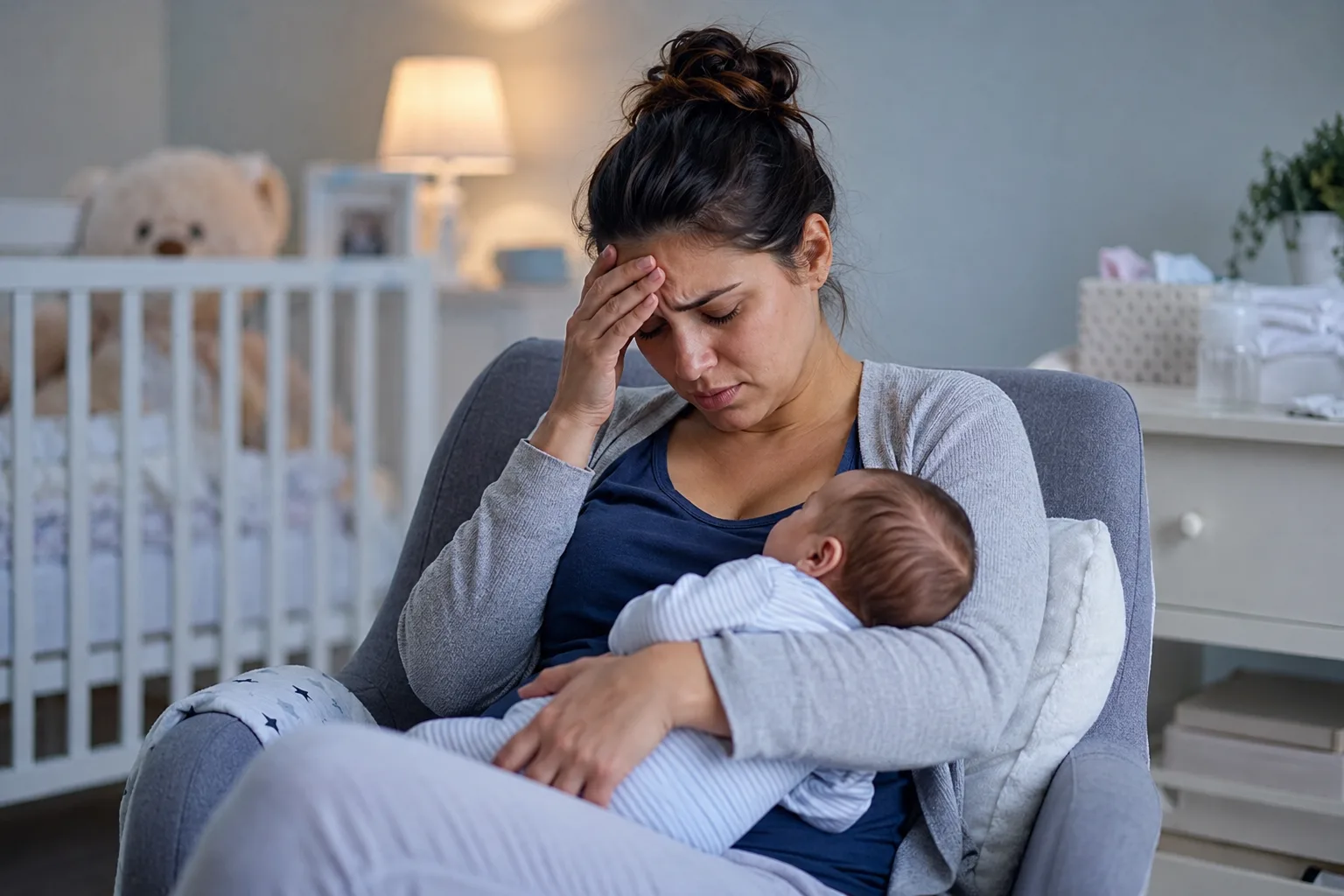
2. Sleep deprivation can amplify anxiety
Newborn care often means interrupted sleep. You may wake several times to feed, settle, or check your baby.
Sleep deprivation can make it harder to regulate emotions and cope with intrusive thoughts. At the same time, anxiety can make falling or staying asleep more difficult, creating a cycle:
Anxiety → poor sleep → greater exhaustion → increased anxiety → more difficulty sleeping
Research and clinical guidance recognize sleep deprivation as an important contributor to postpartum anxiety symptoms.
3. Your brain may stay in “alert mode”
After having a baby, it is natural to become highly attentive to sounds, movements, feeding, breathing, and other signs of your baby’s wellbeing.
When anxiety becomes excessive, however, this protective attention can turn into hypervigilance, meaning you feel constantly on guard for something going wrong.
You might repeatedly check your baby, listen for breathing, or struggle to relax even when everything appears fine.
4. Hormonal and physical changes may contribute
Pregnancy and childbirth involve substantial physical and hormonal changes. The sharp hormonal changes following delivery can influence mood and stress regulation.
Postpartum anxiety is not caused by hormones alone. Sleep disruption, previous anxiety or depression, stressful experiences, limited support, difficult birth experiences, and concerns about the baby’s health can also contribute.
5. Nighttime can make you feel more alone
Even when your partner or family is nearby, nighttime can feel isolating.
If everyone else appears to be sleeping while you are awake with racing thoughts, you may feel that you are the only person struggling.
That feeling can intensify anxiety.
What Does Postpartum Anxiety Feel Like at Night?
Postpartum anxiety does not look the same for everyone. Some people experience mainly mental symptoms, while others notice strong physical sensations.
Common nighttime symptoms
You may experience:
- Racing or repetitive thoughts
- Fear that something bad will happen to your baby
- Difficulty falling asleep
- Waking frequently and being unable to return to sleep
- A racing heartbeat or feeling physically tense
- Restlessness
- Panic attacks
- Repeatedly checking the baby
- Difficulty relaxing even when the baby is sleeping
- Constant “what if?” thoughts
- Feeling unable to switch your mind off
Postpartum anxiety can also occur alongside postpartum depression. The two conditions are different, but they frequently overlap.
Is it normal to worry about your baby at night?
Some nighttime worry is completely understandable.
New parents naturally check their baby, especially during the early weeks. The concern becomes more important to discuss with a healthcare professional when the worry becomes persistent, overwhelming, difficult to control, or starts affecting your sleep, relationships, daily activities, or ability to function.
You do not need to wait until your symptoms become severe before seeking support.
How Can You Calm Postpartum Anxiety at Night?
There is no single nighttime routine that works for everyone. The goal is not to force yourself to stop worrying, but to break the cycle of escalating thoughts and heightened physical alertness.
Create a predictable nighttime routine
A simple routine can help your brain recognize that the day is ending.
Depending on your circumstances, this could include:
- Lowering stimulation before bedtime.
- Keeping lights and screens less stimulating.
- Preparing essential baby items before bed.
- Using slow breathing or another relaxation technique.
- Going to bed when you have an opportunity to sleep rather than waiting until you feel completely exhausted.
Share nighttime responsibilities when possible
If you have a partner, relative, or trusted support person available, discuss practical ways they can help.
Support might include:
- Taking over part of the nighttime routine
- Preparing feeds or supplies when appropriate
- Handling household tasks
- Watching the baby while you get uninterrupted rest
- Giving you time during the day to recover from a difficult night
Asking for practical help is not a sign that you are incapable of parenting. Protecting your sleep and emotional wellbeing can be an important part of postpartum recovery.
Write down recurring worries
If the same thoughts repeatedly appear at bedtime, writing them down can sometimes help you identify patterns.
For example:
“I am worried that something will happen to my baby while I sleep.”
You can then bring these concerns to your psychologist or healthcare professional rather than repeatedly trying to solve them alone at 2 a.m.
Avoid using reassurance as the only solution
Repeated checking can provide temporary relief but may reinforce the anxiety cycle in some people.
For example, you may check your baby’s breathing, feel relieved, and then five minutes later feel compelled to check again.
A psychologist can help you understand these patterns and develop healthier ways of responding to anxious thoughts.
When Should You Speak to a Psychologist About Postpartum Anxiety?
You do not have to be experiencing a crisis to speak with a psychologist.
Consider professional support if:
- Anxiety is present most days.
- Your thoughts feel difficult to control.
- You cannot sleep even when your baby is sleeping.
- You repeatedly check your baby because you are afraid something is wrong.
- You experience panic attacks.
- Anxiety is affecting your relationship with your partner.
- You are avoiding normal activities because of fear.
- You feel overwhelmed by your responsibilities.
- Your symptoms are getting worse rather than improving.
A psychologist in Dubai can help you understand whether what you are experiencing is postpartum anxiety, another mental health concern, or a combination of difficulties.
Psychological therapy may include approaches such as Cognitive Behavioural Therapy (CBT). CBT is a structured form of therapy that helps you recognize unhelpful thought patterns and develop more useful ways of responding to anxiety.
At Almond Blossoms, psychological support is integrated with fertility and women’s health care. The clinic’s Well-being Centre specifically provides support for perinatal and postpartum mental health concerns, including postpartum anxiety and depression.
Can Postpartum Anxiety Be Treated?
Yes. Postpartum anxiety is treatable, and the appropriate approach depends on your symptoms, medical history, circumstances, and whether other conditions such as postpartum depression or postpartum OCD are present.
Psychological therapy
Therapy can help you:
- Understand what triggers your anxiety
- Recognize unhelpful thinking patterns
- Manage intrusive or repetitive worries
- Develop practical coping strategies
- Improve emotional regulation
- Strengthen communication with your partner
- Process a difficult pregnancy or birth experience
Medication may sometimes be considered
For some people, medication may be appropriate, particularly when anxiety is severe or significantly affecting daily functioning.
Medication decisions should be made with a qualified healthcare professional. If you are breastfeeding, pregnant again, or planning another pregnancy, make sure your doctor knows so treatment can be selected appropriately.
An integrated approach can be helpful
Postpartum emotional wellbeing does not exist separately from physical health.
At Almond Blossoms, fertility specialists, psychologists, and other mental health professionals work within an integrated fertility and wellbeing model. The clinic’s psychological team includes clinical and counselling psychologists, including Dr. Vassiliki Simoglou and Dr. Candice Render.
This model can be particularly useful for individuals and couples who have already experienced fertility treatment, pregnancy loss, IVF-related stress, or other emotionally demanding reproductive experiences.
Postpartum Anxiety vs Postpartum Depression: Are They the Same?
No. Postpartum anxiety and postpartum depression are different conditions, although they can occur together.
Postpartum anxiety is typically dominated by excessive fear, worry, nervousness, physical tension, racing thoughts, or a feeling that something bad is going to happen.
Postpartum depression can involve persistent sadness, hopelessness, loss of interest, guilt, emotional numbness, or difficulty connecting with your baby.
Some parents experience both.
What about postpartum OCD?
Postpartum obsessive-compulsive disorder (OCD) can involve unwanted, intrusive thoughts or images often involving fears about the baby’s safety and repetitive behaviors or mental rituals intended to reduce anxiety.
Having an unwanted intrusive thought does not automatically mean you want it to happen.
However, frightening or persistent intrusive thoughts deserve professional assessment, particularly when they are causing significant distress or affecting your ability to function.
When is urgent help necessary?
If you have thoughts of harming yourself or your baby, feel unable to keep yourself or your baby safe, or experience hallucinations, delusions, severe confusion, or a loss of contact with reality, seek urgent medical help immediately.
Postpartum psychosis is rare but is a medical emergency and is different from postpartum anxiety.
Conclusion: You Don’t Have to Manage Nighttime Anxiety Alone
If your postpartum anxiety becomes louder when the house is quiet, and everyone else is asleep, it does not mean you are weak or failing as a parent. Nighttime can magnify worry because sleep disruption, responsibility, isolation, and anxious thinking can reinforce one another.
The important question is not whether you should be able to handle it alone. It is whether the anxiety is affecting your sleep, wellbeing, relationships, or ability to enjoy life with your baby.
At Almond Blossoms Fertility & Wellbeing Center in Dubai Healthcare City, psychological care is available alongside reproductive and women’s health services, allowing postpartum emotional concerns to be addressed as part of whole-person care.
If nighttime anxiety is becoming difficult to manage, book a consultation with the Almond Blossoms wellbeing team and speak with a qualified psychologist about the support that may be right for you.
A Consultation in Dubai
→ Website
Frequently Asked Questions (FAQs)
Why is postpartum anxiety worse at night?
Nighttime can remove daytime distractions, while sleep deprivation, responsibility for the baby, physical recovery, and repetitive worries increase mental alertness. Anxiety can also interfere with sleep, creating a cycle of poor sleep and greater anxiety.
How do I stop postpartum anxiety at night?
A predictable bedtime routine, practical support, relaxation techniques, and protecting opportunities for sleep may help. If anxiety remains intense or interferes with your functioning, speak with a healthcare professional or psychologist.
Is postpartum anxiety normal?
Some worry is normal after having a baby. However, persistent or overwhelming anxiety that is difficult to control and interferes with sleep, daily life, or relationships may require professional support.
Can a psychologist help with postpartum anxiety?
Yes. A psychologist can help you identify anxiety patterns, manage intrusive thoughts, develop coping skills, and address emotional difficulties related to pregnancy, childbirth, parenting, or previous experiences. Evidence-based therapies such as CBT may be used.
How long does postpartum anxiety last?
There is no fixed timeline. Symptoms can persist or change over time, and they do not always disappear without support. If anxiety is worsening or interfering with your life, speaking with a healthcare professional can help determine appropriate treatment.