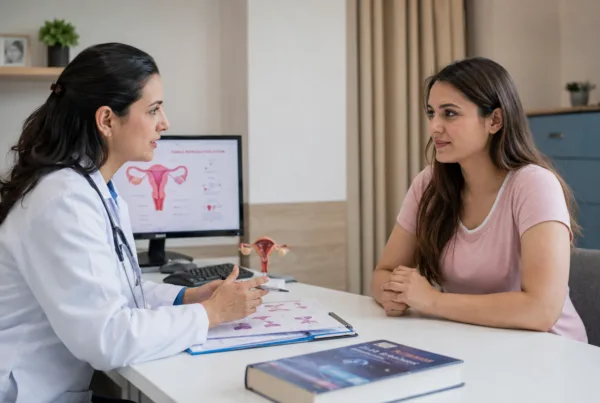
Unexpected vaginal bleeding outside your normal period can be confusing and worrying, especially when you are trying to conceive. It may be caused by hormonal changes, ovulation, contraception, infections, fibroids or polyps, but pregnancy-related causes and other conditions also need to be considered. If the bleeding is unusual or recurrent, a gynaecologist can help identify the underlying cause.
What Is Considered Abnormal Vaginal Bleeding?
Vaginal bleeding is considered abnormal when it occurs outside your expected menstrual pattern or is significantly different from your usual flow.
This can include:
- Bleeding or spotting between periods
- Bleeding after sexual intercourse
- Unusually heavy periods
- Bleeding that lasts longer than seven days
- Periods occurring unusually frequently
- Bleeding after menopause
- Unexpected bleeding during pregnancy
The term abnormal uterine bleeding (AUB) is often used by doctors when bleeding from the uterus is different from the expected pattern in a person who is not pregnant.
Not every episode indicates a serious problem. However, unexplained bleeding should not simply be ignored, particularly if it keeps happening or occurs alongside pain or other symptoms.
What does spotting between periods mean?
Spotting refers to light bleeding that occurs when you are not expecting your period. It can appear as pink, red, or brown discharge and may happen for several reasons.
For example, hormonal contraception can cause breakthrough bleeding, while ovulation, cervical irritation, infections or conditions affecting the uterus may also contribute.
Because the same symptom can have several different causes, the pattern of bleeding alone cannot reliably tell you what is happening.
What Causes Vaginal Bleeding Between Periods?
There is no single cause of abnormal vaginal bleeding. Your age, menstrual pattern, medications, reproductive history and other symptoms all help a gynaecologist determine what may be contributing to it.
1. Hormonal changes and ovulation
Changes in reproductive hormones can affect the thickness and stability of the uterine lining.
Irregular ovulation can result in unpredictable bleeding. This can occur with conditions such as polycystic ovary syndrome (PCOS), thyroid disorders, and other hormonal disturbances.
If you are also experiencing irregular periods, difficulty conceiving, acne, excessive hair growth, or other hormonal symptoms, your fertility specialist may recommend an evaluation rather than treating the bleeding alone.
2. Birth control and medications
Hormonal contraceptives, including pills and other hormonal methods, can sometimes cause breakthrough bleeding, particularly when starting, changing, or using them inconsistently.
Certain medications, including blood-thinning medicines, can also contribute to heavier bleeding. A copper intrauterine device (IUD) may increase menstrual bleeding, especially during the first year of use.
Do not stop prescribed medication simply because you notice bleeding. Discuss the symptom with your doctor first.
3. Fibroids and polyps
Fibroids are non-cancerous growths that develop in the muscular wall of the uterus. Polyps are growths that can develop inside the uterus or on the cervix.
Both can contribute to:
- Bleeding between periods
- Heavy periods
- Longer periods
- Bleeding after sex
- Problems related to fertility in some patients
An ultrasound may help identify structural causes of abnormal bleeding.
4. Infections and cervical conditions
Infections involving the cervix or reproductive tract can sometimes cause unexpected bleeding, particularly after intercourse.
Sexually transmitted infections (STIs), such as chlamydia, are among the possible causes of bleeding between periods or after sex. Cervical changes, polyps, and irritation can also produce bleeding.
Your doctor may recommend an examination or infection testing depending on your symptoms and medical history.
5. Pregnancy-related causes
If there is any possibility that you could be pregnant, unexpected bleeding should be evaluated rather than automatically assumed to be a period.
Bleeding during early pregnancy can have different causes. In some situations, bleeding combined with abdominal or pelvic pain can indicate an ectopic pregnancy, where a pregnancy develops outside the uterus and requires urgent medical assessment.
6. Changes in the uterine lining
The endometrium is the lining inside the uterus. Hormonal changes can sometimes cause this lining to become unusually thick, particularly when ovulation is irregular.
In some patients, abnormal changes of the uterine lining can cause irregular or heavy bleeding and require further investigation.
7. Less common but important causes
Although many causes of abnormal bleeding are treatable and non-serious, abnormal bleeding can occasionally be associated with precancerous or cancerous changes involving the cervix or uterus.
This does not mean that unexpected bleeding automatically indicates cancer. It means persistent, unexplained, or postmenopausal bleeding deserves appropriate medical evaluation.
When Should You See a Gynaecologist for Vaginal Bleeding?
If you experience unexpected vaginal bleeding, especially repeatedly, arranging an assessment with a gynaecologist in Dubai can help determine whether further investigation is necessary.
You should particularly seek medical evaluation if you have:
- Repeated bleeding between periods
- Bleeding after sex
- Very heavy periods
- Bleeding lasting longer than usual
- Irregular periods combined with difficulty conceiving
- Pelvic or lower abdominal pain
- Dizziness, unusual fatigue or weakness
- Bleeding after menopause
- Bleeding when you may be pregnant
A sudden episode of very heavy bleeding requires urgent medical attention. Almond Blossoms advises emergency assessment when heavy bleeding is accompanied by symptoms such as dizziness, shortness of breath, or chest pain.
Is vaginal bleeding after sex normal?
Bleeding after sex should be assessed if it is unexplained or happens repeatedly.
Possible causes include cervical ectropion, cervical polyps, vaginal dryness, and infections. In some cases, further examination or testing may be needed to determine the source.
How Does a Gynaecologist Diagnose Abnormal Vaginal Bleeding?
Your appointment will usually begin with questions about your bleeding pattern and medical history.
It can be helpful to record:
- The date your bleeding started
- How long it lasted
- Whether it was spotting or heavy bleeding
- Whether it occurred after sex
- Your last normal menstrual period
- Any pelvic pain or other symptoms
- Current medications and contraception
- Previous pregnancies and fertility treatment
Your doctor may then recommend investigations based on your symptoms.
Pregnancy testing
If pregnancy is possible, a pregnancy test may be appropriate because pregnancy-related conditions can cause unexpected bleeding.
Blood tests
Blood tests may help assess issues such as anemia or identify certain hormonal or thyroid-related problems when clinically appropriate.
Pelvic ultrasound
An ultrasound uses sound waves to create images of your pelvic organs. It may help identify conditions such as fibroids, ovarian abnormalities, or other structural causes of bleeding.
Hysteroscopy
Hysteroscopy is a minimally invasive procedure in which a thin camera is passed through the cervix to examine the inside of the uterus.
It may be considered when your doctor needs a closer view of the uterine cavity or suspects a problem such as a polyp. Almond Blossoms provides hysteroscopy as part of its fertility and diagnostic care.
Cervical or infection testing
Depending on your symptoms, your doctor may recommend examination of the cervix, STI testing, cervical screening or other investigations.
The appropriate tests depend on your individual situation rather than being the same for everyone.
Can Abnormal Vaginal Bleeding Affect Fertility?
Sometimes, the cause of the bleeding, rather than the bleeding itself, can be relevant to fertility.
For example, irregular ovulation can affect menstrual patterns and make conception more difficult. Conditions such as fibroids, polyps, endometriosis, or hormonal disorders may also require consideration when someone is experiencing both abnormal bleeding and difficulty becoming pregnant.
If you have been trying to conceive and notice a persistent change in your menstrual pattern, it may be useful to discuss both symptoms during your fertility consultation.
At Almond Blossoms Fertility & Well-being Center in Dubai, fertility care includes investigations and treatments such as hormonal evaluation, IVF, ICSI, IUI and hysteroscopy.
What if you are preparing for IVF?
Unexpected bleeding before or during fertility treatment can understandably create anxiety.
Your fertility specialist will consider factors such as your menstrual cycle, hormone levels, ultrasound findings, previous treatment history and the timing of the bleeding before deciding whether additional assessment is needed.
IVF means in vitro fertilisation, where eggs and sperm are combined in a laboratory to create embryos. ICSI, or intracytoplasmic sperm injection, involves injecting a selected sperm directly into an egg. These treatments are considered based on individual fertility factors rather than simply because abnormal bleeding has occurred.
How Can You Prepare for Your Gynaecologist Appointment?
You do not need to have all the answers before your appointment. A few simple details can make the consultation more productive.
Keep a bleeding record.
Write down:
- When your normal period started.
- When the unexpected bleeding occurred.
- How long it lasted.
- Whether it was spotting, light or heavy.
- Whether you experienced pain.
- Whether bleeding happened after intercourse.
- Any medications or contraception you are using.
This information can help your doctor understand the pattern and decide whether further testing is appropriate. Almond Blossoms specifically recommends tracking the timing, duration, and amount of bleeding when possible.
Mention fertility concerns
If you are trying to conceive, tell your gynaecologist.
Bleeding may be one part of a broader reproductive-health picture, particularly when accompanied by irregular cycles, suspected hormonal problems or previous fertility difficulties.
Consider the emotional impact too.o
Unexpected bleeding can trigger fear, particularly if you have already experienced infertility, miscarriage or unsuccessful fertility treatment.
You do not have to separate your physical and emotional concerns. Almond Blossoms combines fertility medicine with psychological support, including individual and couples therapy for people navigating fertility-related stress.
Conclusion: Don’t Ignore Unexplained Vaginal Bleeding
Abnormal vaginal bleeding can have many explanations, from temporary hormonal changes to conditions that require treatment. The most useful step is not to guess the cause, but to look at the pattern of bleeding alongside your menstrual cycle, symptoms, reproductive goals, and medical history.
For women in Dubai who are also thinking about pregnancy or fertility treatment, an assessment with a qualified gynaecologist can help clarify whether further investigation is needed. At Almond Blossoms, fertility specialists and wellbeing professionals work within an integrated care model, so reproductive health and emotional wellbeing can be considered together.
If you are experiencing unexplained vaginal bleeding or have concerns about your reproductive health, book a consultation with our fertility specialist at Almond Blossoms Fertility & Well-being Center in Dubai.
Medical note: This article provides general health information and does not replace an individual examination or diagnosis by a qualified healthcare professional.
A Consultation in Dubai
→ Website
Frequently Asked Questions (FAQs)
Is vaginal bleeding between periods always serious?
No. Bleeding between periods can have relatively common causes such as hormonal contraception, ovulation-related changes, infections, fibroids, or polyps. However, unexplained or recurrent bleeding should be evaluated by a healthcare professional.
Why am I bleeding when I am not on my period?
Possible causes include hormonal changes, irregular ovulation, contraception, infections, fibroids, polyps, cervical conditions, and pregnancy-related causes. The exact reason cannot be determined from the bleeding pattern alone, so a gynaecological assessment may be needed.
Can stress cause vaginal bleeding?
Stress can affect menstrual patterns in some people, particularly through its effects on the body’s hormonal and reproductive systems. However, unexplained bleeding should not automatically be attributed to stress. A gynaecologist can help rule out other causes.
When is vaginal bleeding an emergency?
Very heavy bleeding accompanied by dizziness, faintness, shortness of breath, or chest pain requires urgent medical attention. Unexpected bleeding combined with a missed period and abdominal or pelvic pain also requires prompt assessment because ectopic pregnancy is one possible cause.
Can abnormal vaginal bleeding affect my chances of getting pregnant?
The bleeding itself does not necessarily mean you are infertile. However, an underlying condition causing abnormal bleeding, such as irregular ovulation, fibroids or certain hormonal disorders, may sometimes be relevant to fertility. Your fertility specialist can assess the wider picture and recommend appropriate investigations