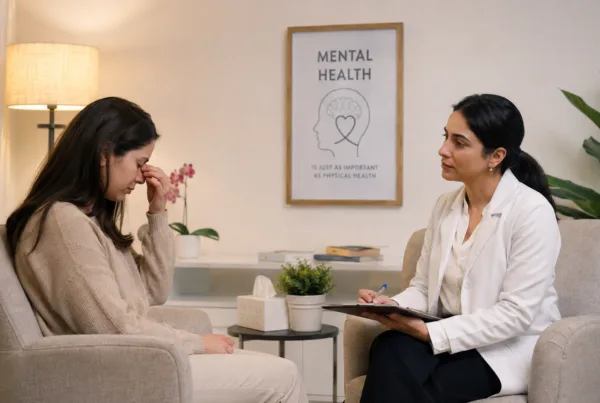
Are you feeling persistently low, exhausted, disconnected from things you usually enjoy, or struggling to concentrate? You may be wondering whether these changes are signs of depression or simply a difficult period.
Depression can affect your mood, sleep, relationships, work, physical health, and fertility journey. Understanding the symptoms can help you recognise when professional support may be appropriate.
What Are the Signs and Symptoms of Depression?
Depression is more than feeling sad for a few days. It is a mental health condition that can involve persistent changes in mood, thoughts, behaviour, physical health, and everyday functioning.
Not everyone experiences depression in the same way. Some people feel deeply sad or hopeless, while others mainly notice exhaustion, irritability, emotional numbness, or a loss of interest in activities they previously enjoyed.
Common signs include:
- Persistent sadness, emptiness, or low mood
- Loss of interest or pleasure in activities
- Feeling hopeless or helpless
- Low self-esteem or feelings of worthlessness
- Excessive guilt
- Irritability or frustration
- Low motivation
- Difficulty concentrating or making decisions
- Persistent tiredness or low energy
- Changes in sleep
- Changes in appetite or weight
- Reduced sexual interest
- Withdrawal from friends, family, or hobbies
- Unexplained aches and physical discomfort
- Thoughts of death, self-harm, or suicide
Having one or two of these symptoms does not automatically mean you have depression. A healthcare professional considers the overall pattern, duration, severity, and impact on your daily life.

How Do You Know If You Are Depressed?
One of the most common questions people ask is: “How do I know if I am depressed?”
A useful starting point is to look for a persistent change from your usual emotional and physical state.
Depression symptoms are generally concerning when they continue for most of the day, nearly every day, for at least two weeks and begin interfering with normal activities, relationships, work, or self-care.
Emotional and psychological signs
You may notice that:
- Things that once made you happy no longer feel enjoyable.
- You feel unusually pessimistic about the future.
- You constantly criticise or blame yourself.
- You feel emotionally numb rather than simply sad.
- Small problems feel unusually difficult to handle.
- You find it harder to make ordinary decisions.
- You feel anxious, restless, or easily irritated.
Depression does not always look like crying or obvious sadness. Some people continue working, caring for their children, socialising, and meeting responsibilities while privately experiencing significant emotional distress.
Physical and behavioural signs
Depression can also affect your body and daily routine.
You may experience:
- Difficulty falling asleep or staying asleep
- Sleeping considerably more than usual
- Persistent fatigue
- Changes in appetite
- Unplanned weight changes
- Reduced sexual interest
- Slower movement or speech
- Headaches or unexplained aches
- Reduced personal care
- Avoidance of social activities
- Loss of interest in hobbies
These symptoms can also occur with physical illnesses, medication effects, prolonged stress, anxiety, or other mental health conditions. This is why professional assessment is important rather than relying on an online checklist.
What Are the Main Symptoms of Depression?
There is no single list of exactly five symptoms that applies to everyone. However, some of the most commonly recognised symptoms are:
1. Persistent low mood
You may feel sad, empty, hopeless, or unusually irritable for an extended period.
2. Loss of interest or pleasure
Activities, hobbies, relationships, or experiences that once mattered to you may no longer feel rewarding.
3. Low energy
Ordinary tasks can feel exhausting. Getting ready for work, looking after your family, or completing household responsibilities may require much more effort than usual.
4. Changes in sleep or appetite
Depression can affect sleep and eating patterns. Some people struggle with insomnia, while others sleep much more. Appetite may decrease or increase.
5. Difficulty concentrating
You may struggle to focus on conversations, work, reading, planning, or everyday decisions.
Other symptoms, including guilt, worthlessness, social withdrawal, physical symptoms, and thoughts of self-harm, can also occur.
Can Fertility Treatment and Infertility Affect Depression?
Fertility treatment can be emotionally demanding. Trying to conceive, receiving an infertility diagnosis, experiencing a miscarriage, going through repeated treatment cycles, or waiting for results can create significant uncertainty and emotional pressure.
For individuals and couples undergoing IVF, ICSI, IUI, egg freezing, or other fertility procedures, emotional wellbeing deserves attention alongside physical treatment.
Almond Blossoms’ fertility psychology service specifically supports individuals and couples experiencing emotional challenges related to infertility, including sadness, anxiety, relationship strain, grief, and depression.
This does not mean that feeling stressed during fertility treatment automatically means you have depression. However, if sadness, hopelessness, emotional exhaustion, withdrawal, sleep problems, or loss of interest persist and begin affecting your everyday life, speaking with a mental health professional can help clarify what you are experiencing.
At Almond Blossoms, fertility specialists and mental health professionals work within an integrated care model, allowing emotional wellbeing to be considered alongside reproductive healthcare.
When Should You Seek Depression Help in Dubai?
You do not need to wait until symptoms become overwhelming before seeking support.
Consider speaking with a healthcare professional if:
- Symptoms continue for two weeks or longer.
- You have stopped enjoying activities you previously valued.
- Your sleep or appetite has changed significantly.
- You are struggling to work or manage daily responsibilities.
- Your relationships are being affected.
- Fertility treatment or infertility is becoming emotionally difficult to manage.
- You feel persistently hopeless, worthless, or emotionally numb.
- Symptoms are becoming progressively worse.
Professional assessment can help determine whether depression is present and whether another physical or psychological condition could be contributing to your symptoms.
If you are looking for depression help in Dubai, Almond Blossoms’ Well-being Centre provides psychological care for depression, anxiety, fertility-related concerns, relationship difficulties, and other mental health conditions. Its multidisciplinary team includes psychologists, psychiatrists, neuropsychologists, and mental health professionals.
What Does Depression Treatment Involve?
Treatment depends on your symptoms, their severity, your medical history, and your individual circumstances.
Psychological treatments are an important part of depression care. Evidence-based approaches include cognitive behavioural therapy (CBT), interpersonal psychotherapy, behavioural activation, and problem-solving therapy. Medication may also be considered by a qualified clinician, particularly in some moderate or severe cases.
A depression specialist in Dubai may assess:
- How long your symptoms have been present
- How frequently they occur
- How strongly they affect your daily life
- Your previous mental health history
- Current medications and medical conditions
- Sleep, appetite, and energy changes
- Fertility or reproductive health concerns where relevant
- Any thoughts of self-harm or suicide
This assessment helps your clinician determine what type of support may be appropriate.
What Is the Difference Between Depression and a Difficult Period?
Everyone experiences sadness, disappointment, stress, grief, and difficult life events. Experiencing these emotions does not necessarily mean you have depression.
The distinction often involves persistence, severity, and impact on functioning.
A difficult period may improve as circumstances change or after you have had time to recover. Depression can persist and begin affecting several areas of life, including relationships, work, sleep, appetite, motivation, and everyday activities. For example, feeling sad after an unsuccessful fertility cycle is understandable. However, if the sadness develops into persistent hopelessness, loss of interest, severe sleep disruption, withdrawal from others, or difficulty functioning for an extended period, professional support may be appropriate.
You do not need to diagnose yourself. A psychologist, psychiatrist, or other qualified healthcare professional can help you understand the symptoms and determine the next step.
Depression Treatment and Emotional Wellbeing at Almond Blossoms
Almond Blossoms brings fertility care and mental wellbeing together within one clinical environment in Dubai Healthcare City.
The Well-being Centre provides support for depression and other mental health concerns, while the wider clinic provides fertility services including IVF, ICSI, IUI, fertility preservation, genetic testing, and other reproductive treatments. This integrated model can be particularly relevant when emotional wellbeing and fertility care overlap.
For example, someone undergoing fertility treatment may benefit from psychological support while also receiving reproductive care. Couples may also seek counselling when fertility challenges begin affecting communication, intimacy, or their relationship. Almond Blossoms’ Well-being team includes clinical and counselling psychologists with experience supporting people with depression, grief, life transitions, relationship concerns, and fertility-related emotional challenges.
Conclusion
Depression can affect much more than your mood. Changes in sleep, energy, appetite, concentration, relationships, motivation, and enjoyment can all be part of the picture.
If you are experiencing persistent symptoms, particularly while navigating infertility or fertility treatment, professional assessment can help you understand what is happening and identify appropriate support.
At Fertility & Well-being Centre in Dubai Healthcare City, mental health and fertility care are brought together so that emotional wellbeing can be considered alongside reproductive health.
If you are concerned about depression, book a consultation with the Almond Blossoms Well-being team to discuss your symptoms and appropriate next steps.
A Consultation in Dubai
→ Website
Frequently Asked Questions (FAQs)
What are the first signs of depression?
Early signs can include persistent low mood, loss of interest, tiredness, sleep changes, reduced motivation, difficulty concentrating, irritability, or withdrawing from activities and people. Symptoms that persist and interfere with daily life should be discussed with a healthcare professional.
How long do depression symptoms need to last?
For a clinical diagnosis of depression, symptoms generally occur most of the day, nearly every day, for at least two weeks. However, you do not have to wait two weeks if your symptoms are severe or you are concerned about your safety.
Can depression cause physical symptoms?
Yes. Depression can be associated with fatigue, sleep problems, appetite or weight changes, reduced sexual interest, slowed movement, and unexplained aches or pains.
Is depression treatable?
Yes. Effective treatments are available, including psychological therapies and, when clinically appropriate, medication. The right approach depends on the individual and the severity and characteristics of their symptoms.
When should I seek depression treatment in Dubai?
Consider professional support when symptoms persist, interfere with your work or relationships, affect your ability to manage daily activities, or become increasingly difficult to cope with. If you experience thoughts of suicide or self-harm, seek urgent professional or emergency help rather than waiting for a routine appointment.