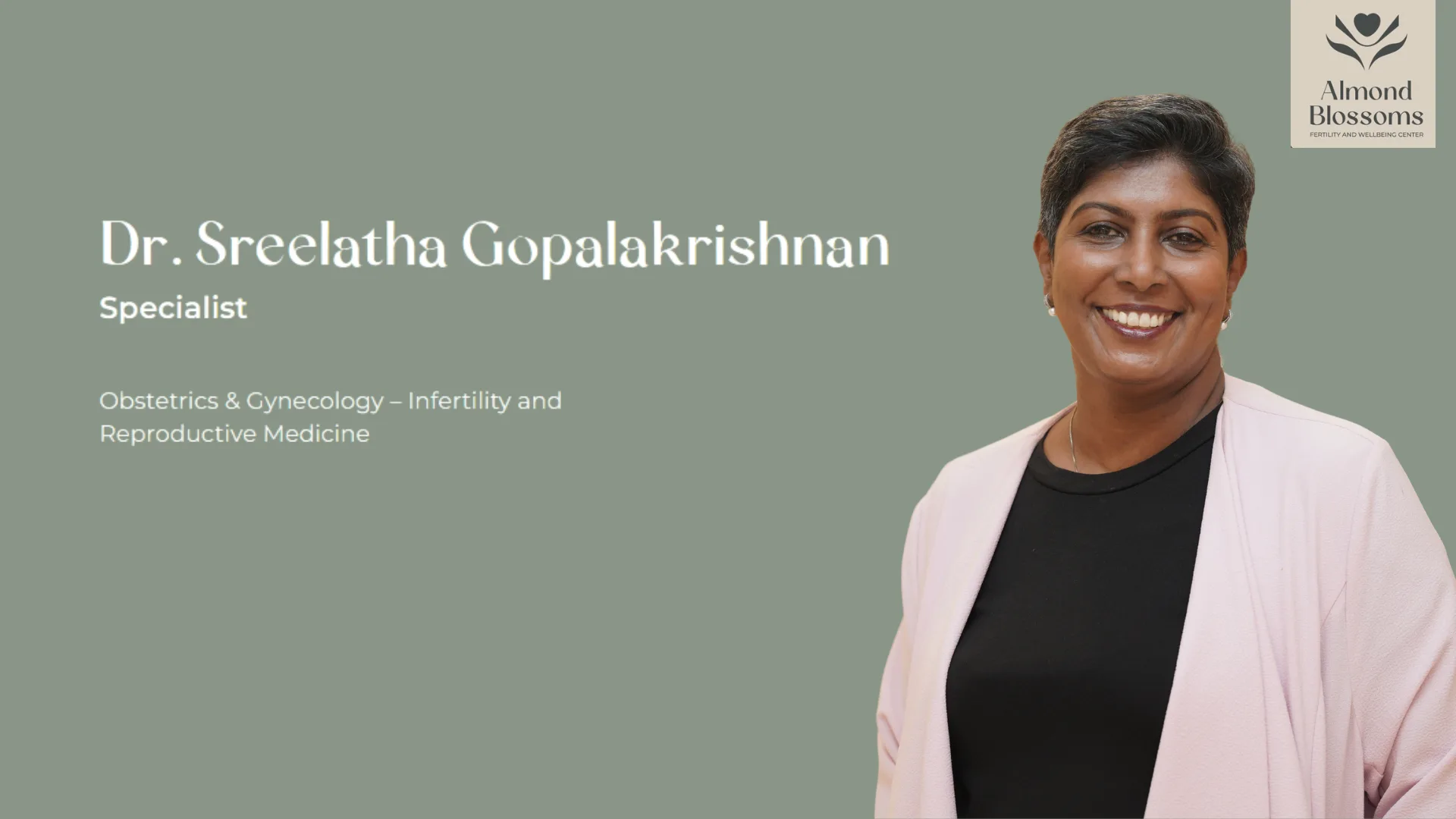
Considering IVF treatment in Dubai? Understanding what happens before, during, and after an IVF cycle can make the fertility journey feel less overwhelming. In this guide, Dr. Sreelatha Gopalakrishnan, Specialist in Infertility and Reproductive Medicine at Almond Blossoms, explains when IVF may be recommended, what fertility assessment involves, what happens during treatment, how long an IVF cycle may take, and what factors can affect your chances of success.
Every fertility journey is different, so IVF treatment is planned according to your age, medical history, ovarian reserve, sperm health, and individual fertility needs.
IVF Treatment in Dubai
IVF (in vitro fertilisation) is an assisted reproductive treatment in which eggs are collected from the ovaries and fertilised with sperm in a laboratory before an embryo is transferred to the uterus.
IVF may be considered when conditions such as blocked fallopian tubes, male-factor infertility, reduced ovarian reserve, endometriosis, unexplained infertility, or previous unsuccessful fertility treatments affect the chances of natural conception.
At Almond Blossoms in Dubai Healthcare City, IVF treatment is planned after an individual fertility assessment. Depending on your diagnosis, treatment may include ovarian stimulation, egg retrieval, IVF or ICSI fertilisation, embryo development, and embryo transfer.
When Is IVF Treatment Recommended?
IVF is not automatically the first infertility treatment. A fertility specialist first evaluates both partners to understand the possible cause of difficulty conceiving and determine whether IVF is appropriate.
IVF may be considered for:
- Blocked or damaged fallopian tubes
- Male-factor infertility
- Reduced ovarian reserve
- Endometriosis
- Certain ovulation disorders, including PCOS
- Unexplained infertility
- Previous unsuccessful fertility treatments
- Fertility concerns where other treatment options are unlikely to be effective
The recommended treatment depends on your individual fertility assessment, age, medical history, and reproductive goals.
What Happens Before IVF Treatment?
IVF usually begins with a fertility consultation rather than immediately starting medication.
During the initial assessment, your fertility specialist may review:
- Your medical and fertility history
- Menstrual cycle and ovulation history
- Previous pregnancies or fertility treatments
- Ovarian reserve and hormone levels
- Ultrasound findings
- Semen analysis and male fertility factors
- Previous medical or surgical conditions
These findings help your specialist determine whether IVF, ICSI, IUI, ovulation treatment, or another approach is more appropriate for you.
The goal is not simply to start IVF; it is to choose the treatment that best fits your individual fertility needs.
The IVF Process: Step by Step
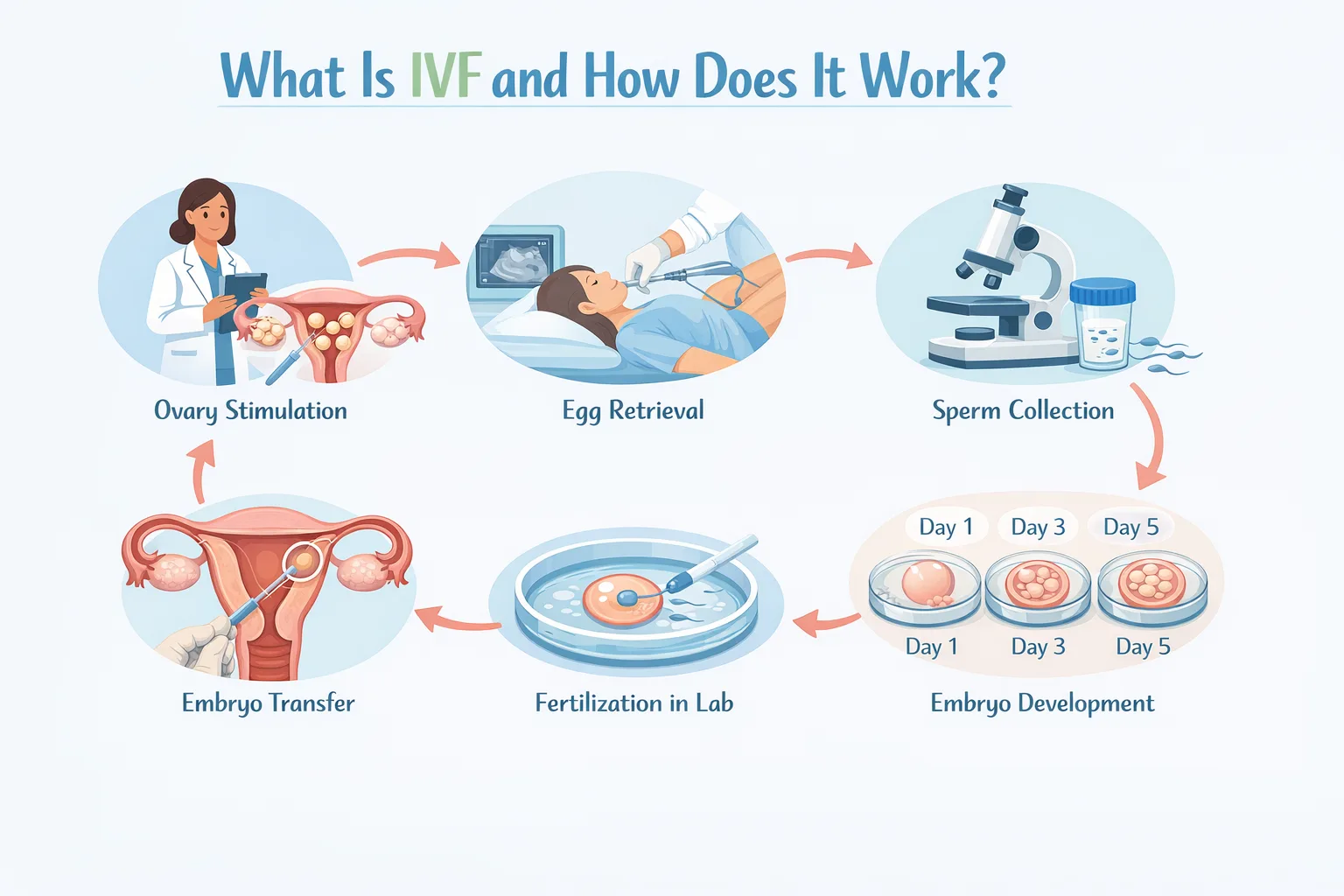
What to Expect During IVF Treatment
1. Ovarian Stimulation
Fertility medications are used to encourage the ovaries to develop multiple follicles. Your response is monitored through ultrasound scans and, when appropriate, blood tests.
2. Egg Retrieval
Once the follicles are ready, mature eggs are collected through an ultrasound-guided procedure. The procedure and type of sedation are determined according to your treatment plan.
3. Fertilisation
Retrieved eggs are fertilised with sperm in the embryology laboratory. Depending on sperm factors and your clinical history, conventional IVF or ICSI may be recommended.
4. Embryo Development
Fertilised eggs are monitored as they develop into embryos. Some embryos may continue developing to the blastocyst stage.
5. Embryo Transfer
A suitable embryo may be transferred into the uterus during a fresh or frozen embryo transfer cycle, depending on the individual treatment plan.
How Long Does IVF Treatment Take?
The length of an IVF treatment cycle varies from person to person. The active treatment phase may take several weeks, while preparation before stimulation can add additional time depending on the required tests and treatment plan.
A typical IVF journey may include:
Fertility assessment → Treatment planning → Ovarian stimulation → Egg retrieval → Fertilisation → Embryo development → Embryo transfer → Pregnancy blood test
Your fertility specialist will provide a personalised timeline based on your ovarian response, treatment protocol, and whether fresh embryo transfer, frozen embryo transfer, or genetic testing is planned.
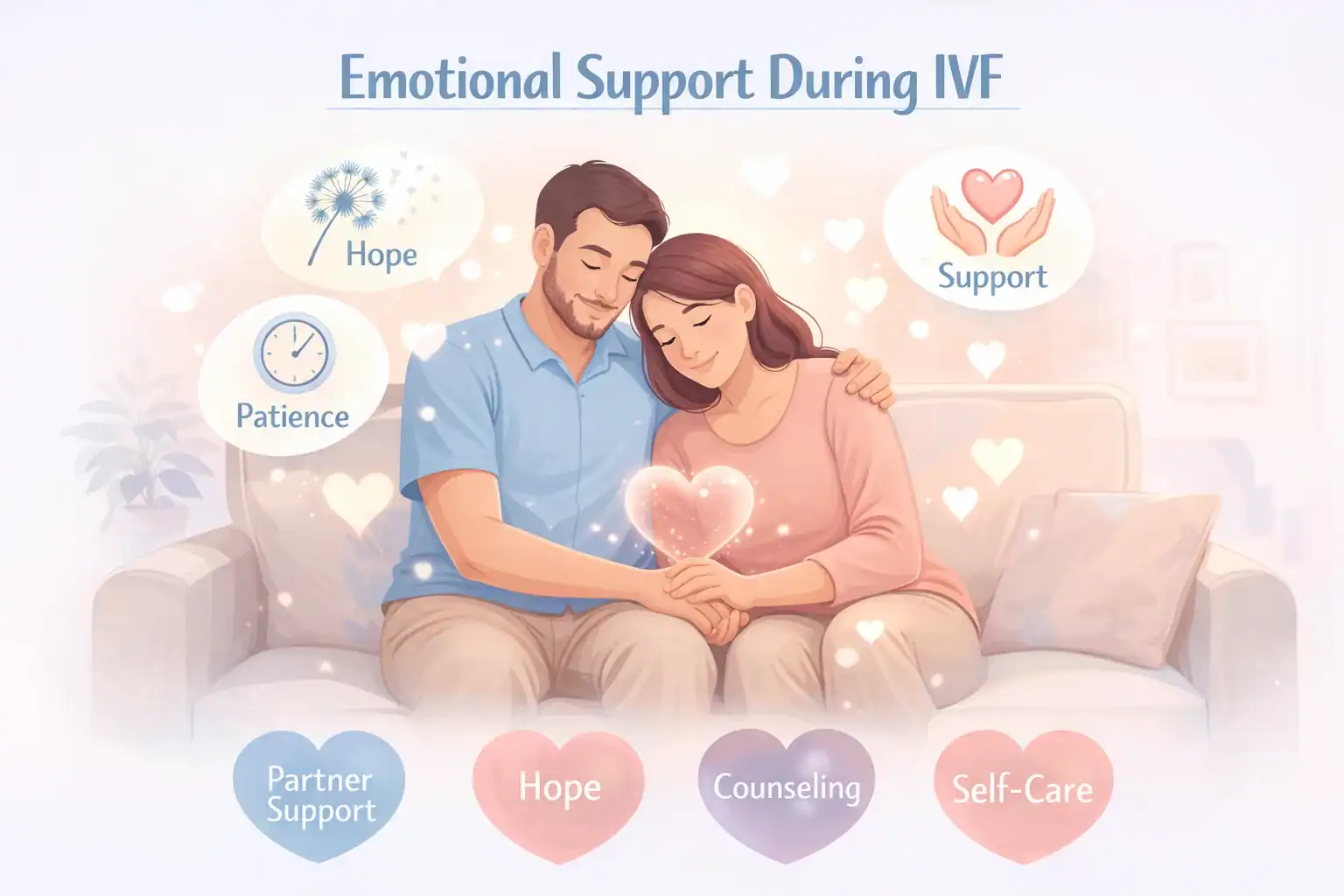
Emotional Support During IVF
IVF vs ICSI: What Is the Difference?
IVF and ICSI are both laboratory fertilisation methods used during an IVF treatment cycle.
With conventional IVF, eggs and sperm are placed together in the laboratory so fertilisation can occur naturally.
With ICSI, an embryologist injects a single sperm directly into a mature egg. ICSI may be considered when there are significant sperm-related fertility concerns, previous fertilisation difficulties, or specific clinical indications.
The choice between IVF and ICSI should be based on your fertility assessment rather than assuming that one method is always better.
Meet Dr. Sreelatha Gopalakrishnan
Dr. Sreelatha Gopalakrishnan is a Specialist in Obstetrics & Gynecology with a focus on Infertility and Reproductive Medicine at Almond Blossoms in Dubai.
With more than a decade of experience in reproductive medicine, her clinical areas include female infertility diagnosis and treatment, IVF/ICSI cycles, reproductive endocrinology, PCOS and endometriosis-related fertility concerns, customized IVF protocols, and fertility preservation.
Her training includes reproductive medicine fellowships and postgraduate education in reproductive medicine, including training associated with Delhi, Kiel, and the University of Warwick.
Dr. Sreelatha’s approach combines evidence-based reproductive medicine with individualized treatment planning and compassionate patient care.
These credentials are supported by her current Almond Blossoms profile.
Medically reviewed by:
Dr. Sreelatha Gopalakrishnan
Specialist – Infertility & Reproductive Medicine
Almond Blossoms Fertility & Wellbeing Center, Dubai
Why Choose Almond Blossoms for IVF Treatment in Dubai?
Almond Blossoms Fertility & Wellbeing Center provides fertility and IVF care in Dubai Healthcare City, combining reproductive medicine with emotional and psychological support.
Patients can access fertility assessment, IVF and ICSI, fertility preservation, genetic testing, and other reproductive services as part of a multidisciplinary fertility care model.
Our fertility team includes specialists in infertility and reproductive medicine, reproductive endocrinology, obstetrics and gynecology, and embryology. The centre also provides wellbeing support to help patients manage the emotional challenges that can accompany fertility treatment.
Next step: Book a consultation with our fertility team to discuss your individual fertility needs.
What is IVF treatment?
IVF is an assisted reproductive treatment in which eggs are collected and fertilised with sperm in a laboratory before an embryo is transferred to the uterus.
When should I consider IVF treatment in Dubai?
IVF may be considered when infertility is related to blocked fallopian tubes, male-factor infertility, reduced ovarian reserve, endometriosis, unexplained infertility, or unsuccessful previous treatments. A fertility specialist can determine whether IVF is appropriate after an individual assessment.
Is IVF painful?
Some parts of IVF, such as injections and egg retrieval, may cause discomfort. Pain and recovery vary between patients, and your fertility team can explain what to expect and how discomfort is managed.
Can IVF guarantee pregnancy?
No. IVF can improve the chance of pregnancy for appropriate patients, but no fertility treatment can guarantee pregnancy. Outcomes depend on factors such as age, ovarian reserve, sperm health, embryo quality, and individual medical conditions.
What tests are needed before IVF?
Depending on your situation, testing may include medical history, hormone and ovarian reserve assessment, ultrasound, and semen analysis. Additional investigations may be recommended based on your individual history.