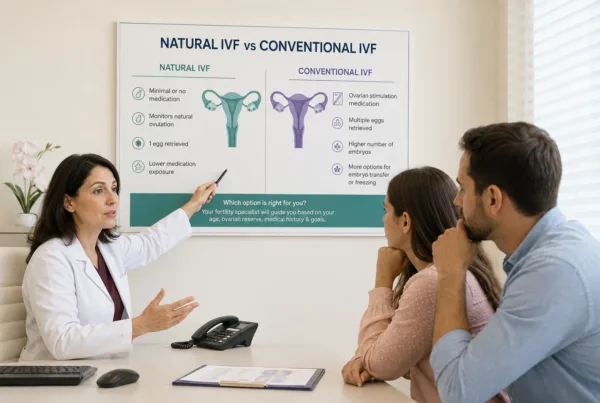
IVF can be an emotional journey for both partners. Alongside medical appointments, treatment decisions, and uncertainty about the future, couples may experience stress, anxiety, communication difficulties, and changes in their relationship.
Even when both partners want the same outcome, they may cope with fertility treatment differently. One partner might want to talk openly about every concern, while the other may prefer to remain positive or avoid difficult conversations. These differences can sometimes lead to misunderstandings or emotional distance.
Couples therapy during IVF provides a space for partners to understand each other’s experiences, communicate more effectively, and navigate fertility treatment together.
Whether you are preparing for your first IVF cycle or have already experienced several treatment attempts, understanding how fertility treatment affects relationships can help you recognize when additional emotional support may be useful.
How IVF Can Affect Your Relationship
Fertility treatment involves more than medical procedures. It can influence everyday routines, emotional well-being, intimacy, finances, and the way partners communicate.
Understanding these challenges can help couples approach them with greater patience and understanding.
1. Emotional Stress and Uncertainty
IVF can involve periods of waiting, difficult decisions, and uncertainty about treatment outcomes. Partners may experience anxiety before appointments, worry about the future, or struggle with disappointment when treatment does not go as hoped.
These feelings can affect each person’s mood and ability to communicate.
One partner might want reassurance, while the other may need quiet time to process their emotions. Neither response necessarily means that a partner cares less.
Recognizing that people cope differently can help couples avoid unnecessary misunderstandings.
2. Communication Problems During Fertility Treatment
Communication can become more difficult when both partners are experiencing stress.
Conversations about appointments, medication schedules, finances, and treatment decisions may gradually replace discussions about everyday life and emotional needs.
Sometimes, partners avoid discussing difficult feelings because they do not want to upset each other.
However, avoiding every uncomfortable conversation can leave important concerns unresolved.
Setting aside time to discuss feelings, expectations, and worries can help couples stay emotionally connected throughout treatment.
3. Changes in Intimacy and Connection
The demands of fertility treatment may affect intimacy and physical affection.
Medical schedules, stress, fatigue, and concerns about conception can change how partners experience physical closeness. One partner may want reassurance through affection, while the other may feel emotionally overwhelmed.
It can help to remember that intimacy includes more than sexual activity.
Spending time together, expressing appreciation, offering reassurance, and sharing everyday experiences can help maintain emotional connection during difficult periods.
4. Different Ways of Coping With IVF
Partners do not always respond to fertility treatment in the same way.
One person may research every treatment detail, discuss possible outcomes, and seek frequent reassurance. The other may prefer to focus on daily routines and avoid thinking too far ahead.
These differences can create tension if either partner assumes that the other’s response is wrong.
Instead of trying to make each other cope in the same way, couples can discuss what support looks like for each person.
For example, one partner may need someone to listen without immediately offering solutions, while the other may appreciate practical help with appointments or household responsibilities.

What Is Couples Therapy During IVF?
Couples therapy during IVF is a form of relationship support that can help partners address emotional and communication challenges associated with fertility treatment.
It offers a structured setting where both individuals can express their concerns, discuss relationship difficulties, and work toward shared goals with the guidance of a qualified therapist.
Sessions may focus on:
- Improving communication and active listening.
- Understanding each partner’s emotional needs.
- Managing disagreements about treatment and future decisions.
- Developing practical ways to cope with fertility-related stress.
- Maintaining emotional and physical connection.
- Establishing healthy boundaries with family members and other sources of pressure.
Couples therapy does not guarantee a particular fertility outcome or eliminate every source of stress. Its purpose is to support emotional well-being, communication, and the relationship as partners navigate treatment.
5 Ways Couples Therapy Can Help During IVF
Every couple experiences fertility treatment differently. The goals of therapy should reflect the specific concerns, circumstances, and needs of both partners.
1. Improving Communication
A therapist can help partners identify communication patterns that lead to misunderstandings.
For example, one partner might interpret silence as a lack of interest, while the other may be staying quiet because they do not know how to express their feelings.
Therapy can help couples practice expressing concerns clearly, listening without interruption, and asking questions rather than making assumptions.
These skills can be useful when discussing treatment decisions, emotional needs, and expectations for the future.
2. Managing Relationship Stress
Fertility treatment can introduce stress into an already busy life.
Partners may struggle to balance medical appointments, professional responsibilities, family expectations, and their relationship.
Couples therapy can help them identify the sources of tension and develop realistic coping strategies.
These might include setting aside time together, dividing practical responsibilities, agreeing on how to discuss treatment updates, and recognizing when either partner needs additional support.
3. Understanding Each Other’s Emotional Needs
Partners may experience sadness, frustration, fear, or uncertainty at different times.
When these emotions are difficult to express, each person may feel misunderstood or unsupported.
Therapy can provide an opportunity to explore these feelings and understand how each partner experiences the fertility journey.
The goal is not to make both partners feel the same way. It is to help them respond to each other’s experiences with empathy and respect.
4. Strengthening Emotional Intimacy
Emotional intimacy involves feeling understood, accepted, and connected to your partner.
During IVF, conversations can become heavily focused on treatment and practical decisions. Couples may have fewer opportunities to enjoy activities that previously brought them together.
A therapist may encourage partners to protect time for their relationship outside fertility-related discussions.
This could involve sharing a meal, going for a walk, enjoying a favorite activity, or simply checking in with each other without trying to solve a problem.
Small, consistent moments of connection can help couples maintain a sense of partnership.
5. Navigating Difficult Decisions Together
Fertility treatment can involve complex decisions about costs, treatment options, timing, and plans.
Partners may have different preferences or levels of readiness when considering these decisions.
Couples therapy can help create a respectful environment for discussing concerns and clarifying priorities.
A therapist does not make medical decisions for the couple. Instead, therapy can help partners communicate their perspectives and prepare questions for their fertility specialist.
Medical guidance should come from the couple’s qualified healthcare team.
How to Support Your Partner During IVF
You do not need to have all the answers to support someone going through fertility treatment.
Often, consistent communication and small acts of understanding can make everyday challenges easier to navigate.
Listen Without Immediately Trying to Fix the Problem
When your partner expresses fear or disappointment, you may feel pressure to offer a solution.
However, your partner might simply need to feel heard.
Try asking, “Would you like me to listen, or would it help to think through possible solutions together?”
This simple question can help you understand what kind of support they need.
Ask What Would Help Them Feel Supported
Do not assume that your partner experiences treatment in the same way you do.
One person might appreciate frequent conversations, while another may need time alone before discussing difficult feelings.
Ask specific questions about what would make the next appointment, treatment decision, or waiting period easier.
Share Responsibilities Where Possible
Fertility treatment can create additional practical demands.
Discuss how you can divide appointments, household responsibilities, research, and scheduling in a way that feels manageable for both partners.
Sharing responsibilities can help each person feel that they are participating in the journey together.
Protect Time for Your Relationship
Try to maintain activities that allow you to connect outside treatment discussions.
You might plan a quiet evening together, enjoy a shared hobby, or spend time outdoors.
These activities do not need to be expensive or elaborate. The aim is to preserve parts of your relationship that are not defined by fertility treatment.
Respect Different Emotional Responses
Your partner may not express feelings in the same way you do.
Rather than interpreting these differences as a lack of commitment, approach them with curiosity.
You can acknowledge that both of you are dealing with a difficult experience while recognizing that each person may need a different type of support.
When Should Couples Consider Counseling During IVF?
There is no single point in the fertility journey when every couple should seek therapy.
Some couples choose counseling before starting treatment, while others seek support when communication becomes difficult, or the emotional demands begin to affect daily life.
You may want to consider professional support if:
- Conversations about IVF regularly turn into arguments.
- One or both partners feel emotionally disconnected.
- You find it difficult to express your concerns openly.
- Treatment-related stress is affecting your relationship.
- You disagree about important decisions and struggle to discuss them constructively.
- You feel uncertain about how to support each other.
- You want help preparing emotionally for the challenges of treatment.
You do not need to wait until your relationship is in crisis to seek support.
Individual therapy may also be appropriate when one partner needs space to explore personal concerns. If either partner experiences persistent or overwhelming emotional distress, a qualified mental health professional can help determine what type of support may be appropriate.
What to Expect From Couples Therapy During IVF
Starting therapy can feel unfamiliar, particularly when you are already managing the demands of fertility treatment.
Understanding the general process may help you decide whether it is right for you.
Initial Consultation
The therapist will generally ask about your relationship, current concerns, and what you hope to achieve through therapy.
You may discuss how fertility treatment has affected communication, emotional connection, or everyday routines.
This is also an opportunity to ask about the therapist’s experience, qualifications, approach, and session arrangements.
Identifying Shared Goals
You and your partner may have different concerns.
For example, one person may want to improve communication, while the other may want help managing disagreements about treatment decisions.
A therapist can help you identify shared priorities while ensuring that both partners have an opportunity to express their needs.
Developing Practical Strategies
Depending on your circumstances, sessions may involve communication exercises, exploring recurring disagreements, identifying emotional triggers, and developing healthier ways to respond to stress.
You may also discuss how to protect time for your relationship and communicate more effectively during difficult periods.
Reviewing Progress
Therapy is an ongoing process, and progress can look different for each couple.
You may begin to notice that difficult conversations become more manageable or that you feel more comfortable asking your partner for support.
Your therapist can help you review your goals and consider what additional support may be useful.
How Almond Blossoms Care Can Support Your Relationship
Every relationship has its own history, communication patterns, and emotional needs. Fertility treatment can introduce additional challenges, making it important for couples to find support that reflects their individual circumstances.
Almond Blossoms Care offers a starting point for exploring relationship support and understanding the services that may be available to you.
If you are considering couples therapy during IVF, you can explore the clinic’s couples therapy services and ask whether its therapists have experience supporting couples through fertility-related challenges.
Before booking, consider asking about therapist qualifications, relevant experience, session format, fees, and availability.
The right support should help you feel comfortable discussing your concerns and understanding your options.
You do not have to navigate every relationship challenge alone. Seeking support can help you understand each other better and approach the fertility journey as a team.
Final Thoughts
IVF can place emotional and practical demands on both partners, but those challenges do not have to define your relationship.
Making space for honest conversations, respecting different coping styles, and maintaining emotional connection can help couples navigate treatment together.
Couples therapy during IVF may offer a supportive environment to work through relationship concerns, strengthen communication, and develop healthier ways to cope with uncertainty.
If you and your partner are finding the fertility journey difficult, consider speaking with a qualified therapist about the support options available to you.
Frequently Asked Questions
Can Couples Therapy Help During IVF?
Couples therapy may help partners communicate more effectively, understand each other’s emotional needs, and develop strategies for managing relationship difficulties during fertility treatment. Whether it’s right depends on the couple’s circumstances and goals.
Why Can IVF Cause Relationship Stress?
IVF may involve uncertainty, medical appointments, financial considerations, and emotionally difficult decisions. Partners may also cope with these demands differently, which can sometimes lead to misunderstandings or disagreements.
How Can I Support My Partner During Fertility Treatment?
Listen without judgment, ask what kind of support they need, share practical responsibilities, and make time for your relationship outside treatment discussions. Open communication can help both partners feel understood.
When Should We Seek Couples Counseling During IVF?
You can consider counseling before treatment begins or whenever relationship stress becomes difficult to manage. Persistent disagreements, emotional distance, and communication difficulties may be reasons to explore professional support.
Does Couples Therapy Improve IVF Success Rates?
Couples therapy should not be presented as a way to guarantee pregnancy or improve IVF success rates. Its focus is on emotional well-being, communication, and relationship support. Questions about treatment outcomes should be discussed with a qualified fertility specialist.