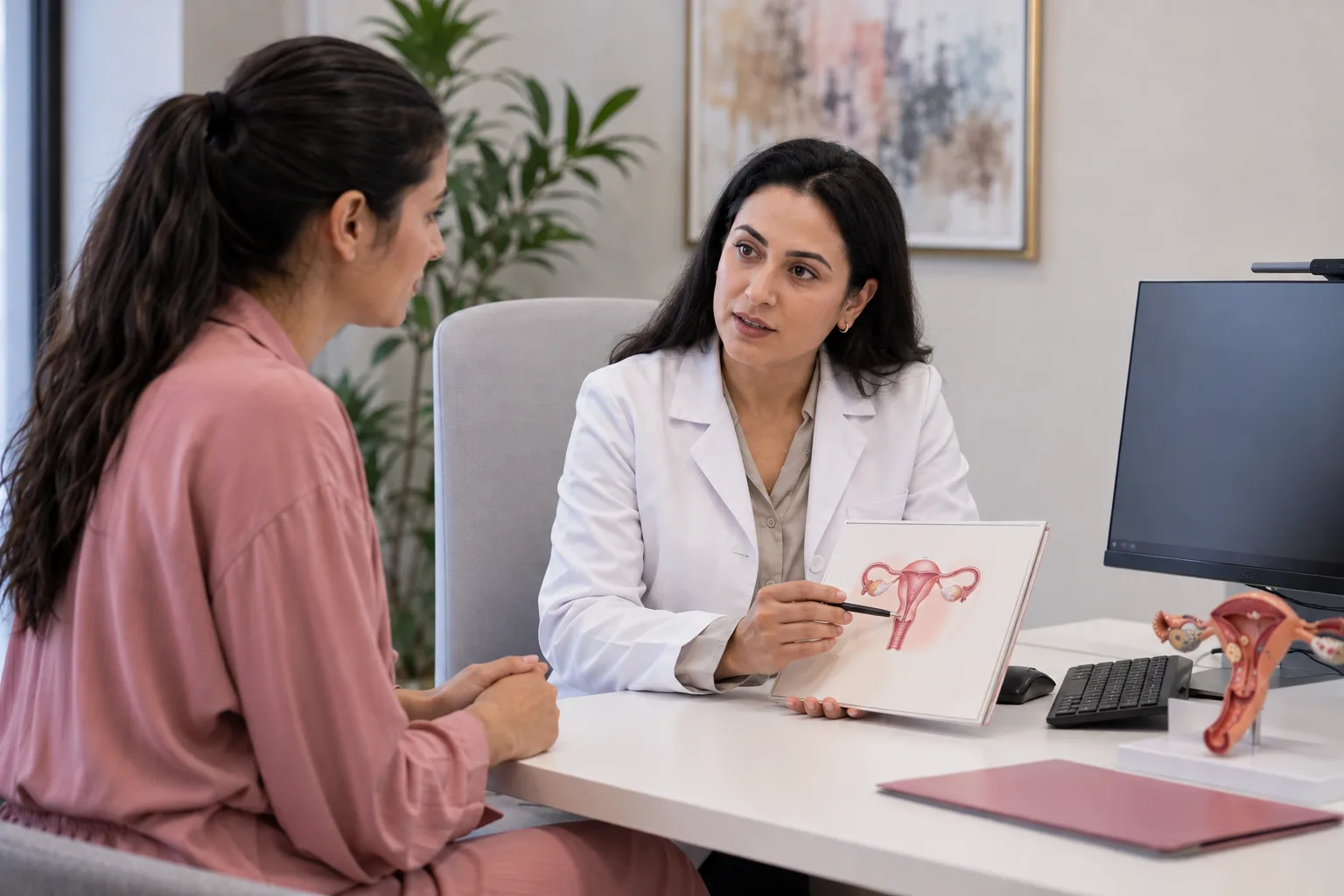
If your periods have suddenly changed, you are experiencing pelvic pain, unusual bleeding, or discomfort during sex, you may be wondering whether it is time to see a gynecologist. A gynecology clinic in Dubai can evaluate these symptoms, identify possible causes, and help you understand what care may be appropriate.
You do not have to wait until a symptom becomes severe before seeking professional advice. Gynecological care also includes preventive check-ups, fertility planning, hormonal concerns, and reproductive health discussions.
Key Takeaways
- Persistent changes in your periods, unusual bleeding, pelvic pain, or vaginal symptoms deserve professional evaluation.
- Fertility concerns are also a valid reason to consult a gynecologist, particularly if you are planning pregnancy in your 30s or 40s.
- Regular gynecological care can address both physical and reproductive health while giving you a safe space to discuss concerns that may affect your emotional wellbeing.

1. Your Periods Have Become Irregular or Unusually Heavy
One of the clearest reasons to schedule a gynecology appointment is a significant change in your menstrual cycle.
Your period can naturally vary from month to month, but repeated changes may deserve investigation. Irregular or absent periods can sometimes be associated with hormonal changes, polycystic ovary syndrome (PCOS), thyroid disorders, changes in weight, stress, or other reproductive health conditions.
When are heavy periods a reason to see a gynecologist?
Heavy menstrual bleeding can interfere with work, sleep, exercise, and everyday activities. Bleeding lasting more than seven days or soaking through a pad or tampon every hour for several hours can be a sign of heavy menstrual bleeding.
You should arrange a medical assessment if you notice:
- Periods lasting significantly longer than usual
- Very heavy flow that disrupts your daily routine
- Large or frequent blood clots
- Bleeding between periods
- Periods becoming increasingly painful
- Periods becoming irregular without an obvious explanation
- Fatigue or weakness alongside heavy bleeding
A gynecologist may review your menstrual history and, depending on your symptoms, recommend blood tests, ultrasound, or other investigations.
If hormonal factors are suspected, an appropriate hormonal evaluation may help your specialist understand what is affecting your cycle.
2. You Have Persistent or Severe Pelvic Pain
Occasional menstrual cramps can be common. However, recurrent, severe or worsening pelvic pain should not simply be accepted as part of being a woman.
Pelvic pain can have many possible causes, including ovarian cysts, fibroids, endometriosis, pelvic inflammatory disease and other gynecological or non-gynecological conditions.
Endometriosis, for example, can cause chronic pelvic pain, painful periods and pain during sexual intercourse. Some women may also experience bowel or bladder symptoms around their periods.
When should pelvic pain be checked?
Consider speaking with a gynecologist if:
- Pain repeatedly returns
- Period pain prevents you from working or carrying out normal activities
- Pain is becoming progressively worse
- You experience pain during sex
- Pelvic discomfort continues outside your period
- Pain is associated with unusual bleeding or discharge
Sudden or severe pelvic pain, particularly with heavy bleeding, dizziness, fainting, fever, vomiting or possible pregnancy, requires prompt medical assessment rather than waiting for a routine appointment.
The goal is not to assume what is causing the pain. Your specialist can determine whether further examination or imaging is appropriate.
3. You Notice Bleeding Between Periods or After Sex
Unexpected vaginal bleeding can be unsettling, particularly when you are unsure whether it is something to worry about.
Bleeding between periods or after sexual intercourse can have several causes, including hormonal contraception, cervical changes, polyps, infections, vaginal dryness and other gynecological conditions. Although it is often not caused by something serious, unexplained bleeding should be assessed by a healthcare professional.
Is bleeding after sex normal?
It should not simply be ignored if it happens repeatedly or without an obvious explanation.
A gynecologist may ask about:
- Your menstrual cycle
- Pregnancy possibility
- Contraception
- Sexual health
- Medications
- Previous gynecological conditions
- Other symptoms such as pain or discharge
Depending on your situation, evaluation may include a pregnancy test, infection testing, examination of the vagina and cervix, ultrasound or other investigations.
If you have missed a period and have unusual bleeding together with pelvic or abdominal pain, seek medical assessment promptly because an ectopic pregnancy needs to be ruled out.
Your Vaginal Discharge, Odor or Comfort Has Changed
Vaginal discharge is normal and can naturally change throughout the menstrual cycle. What matters is a new or persistent change from what is normal for you.
You may want to consult a gynecologist if you notice:
- A strong or unusual odor
- A significant change in color
- A new change in texture
- Unusual amounts of discharge
- Itching or soreness
- Burning when urinating
- Pelvic pain
- Pain during sex
- Discharge accompanied by bleeding
Changes in discharge can occur with conditions such as vaginal infections or sexually transmitted infections (STIs). Symptoms can overlap, so self-diagnosing based only on appearance is not recommended.
A specialist can determine whether testing is appropriate and discuss treatment based on the underlying cause.
5. Sex Has Become Painful or Uncomfortable
Pain during sex is another reason to speak with a gynecologist, particularly when it is persistent, worsening, or affecting your relationship and quality of life.
Possible contributing factors can include vaginal dryness, infections, hormonal changes, pelvic floor problems, endometriosis, fibroids, or other gynecological conditions.
Pain may occur:
- At the vaginal opening
- During penetration
- Deep within the pelvis
- Only at certain times of your menstrual cycle
It can also affect emotional wellbeing. You may begin to feel anxious about intimacy or avoid sex because you are anticipating pain. This can become emotionally difficult, especially for couples who are also trying to conceive.
A gynecological assessment can help identify whether there is an underlying physical cause. When fertility or relationship stress is also involved, integrated psychological support can provide another layer of care.
6. You Are Having Difficulty Getting Pregnant
You do not need to wait for a major symptom before visiting a gynecologist. Fertility planning itself is a valid reason to make an appointment.
If you are trying to conceive, a gynecologist or fertility specialist can help assess factors that may influence your reproductive health.
Depending on your age, medical history, and circumstances, fertility evaluation may consider:
- Menstrual and ovulation patterns
- Ovarian reserve
- Hormonal factors
- Uterine health
- Fallopian tube factors
- Previous pregnancies or fertility treatment
- Your partner’s reproductive health
One commonly discussed fertility marker is AMH (anti-Müllerian hormone). AMH is a hormone produced by ovarian follicles and can provide information about ovarian reserve, meaning the remaining pool of eggs. However, AMH is only one part of a fertility assessment and does not by itself predict whether you will or will not become pregnant.
If treatment becomes appropriate, options can include IUI (intrauterine insemination), IVF (in vitro fertilisation) or ICSI (intracytoplasmic sperm injection), depending on the underlying circumstances.
For couples considering treatment in Dubai, an early consultation can help you understand which evaluations or options may be relevant rather than choosing a treatment based on assumptions.
7. You Are Planning Pregnancy in Your Late 30s or 40s
If you are planning to start a family later, a preconception consultation can be particularly useful.
Fertility naturally changes with age, and both egg quantity and egg quality can decline over time. This does not mean pregnancy is impossible, but it can make individualized fertility planning more important.
A gynecologist or fertility specialist can discuss:
- Your menstrual and reproductive history
- Existing medical conditions
- Medications
- Fertility testing where appropriate
- Lifestyle factors
- Whether fertility preservation should be considered
- Potential treatment options
For some individuals, egg freezing may also be discussed as a fertility-preservation option.
The right decision depends on your circumstances, goals and medical assessment. A consultation is about understanding your options, not being pressured into treatment.
8. You Have Symptoms That May Be Linked to Hormonal Changes
Hormones influence menstruation, ovulation, fertility and many aspects of reproductive health.
You may benefit from a gynecological assessment if you notice a combination of symptoms such as:
- Irregular periods
- Acne or increased facial/body hair
- Unexplained changes in weight
- Hot flashes or night sweats
- Vaginal dryness
- Changes in menstrual flow
- Difficulty conceiving
- New symptoms around perimenopause
For example, PCOS (polycystic ovary syndrome) can affect ovulation and menstrual regularity and may be associated with symptoms such as acne or excess hair growth.
Not every hormonal symptom means you have a hormonal disorder. A specialist needs to consider your complete history and, when appropriate, examination and testing.
This is particularly important when fertility is also a concern because irregular ovulation can make conception more difficult for some people.
9. You Have Urinary or Pelvic Symptoms That Keep Returning
Some symptoms that seem unrelated to gynecology can overlap with reproductive or pelvic health.
Speak with a healthcare professional if you repeatedly experience:
- Burning or pain when urinating
- Pelvic pressure
- Frequent urination
- Urinary leakage
- Pain associated with sexual activity
- Recurrent pelvic discomfort
The pelvis contains several closely connected organs, so symptoms can have different causes. A proper evaluation helps determine whether you need gynecological care, another type of medical assessment, or both.
If urinary symptoms occur together with fever, significant pelvic pain, unusual vaginal discharge, or possible pregnancy, seek prompt medical advice.
10. You Have Not Had a Gynecological Check-Up in a Long Time
Perhaps the most overlooked reason to visit a gynecologist is simply that you have been postponing routine care.
A gynecological appointment is not only for people with symptoms. Preventive visits provide an opportunity to discuss reproductive health, contraception, menstrual concerns, fertility plans, sexual health, and age- or risk-appropriate screening.
Almond Blossoms notes that periodic well-woman visits can include screening, evaluation, counseling and preventive care based on a person’s age and individual risk factors. Not every screening test needs to be performed at every annual visit.
What happens during a gynecology appointment?
Your first appointment may begin with a conversation about:
- Your menstrual cycle
- Current symptoms
- Previous pregnancies
- Medical and surgical history
- Medications
- Fertility goals
- Sexual or reproductive health concerns
- Family medical history
Depending on your symptoms and history, your gynecologist may recommend an examination, blood tests, ultrasound, cervical screening, or other investigations.
Importantly, not every person needs the same examination or tests. Almond Blossoms recommends that pelvic and breast examinations be guided by medical history, symptoms, and clinical need.
When Should You See a Gynecologist Urgently?
Most gynecological symptoms can be assessed through a scheduled appointment, but some situations should not wait.
Seek urgent medical assessment if you experience:
- Severe or rapidly worsening pelvic pain
- Heavy vaginal bleeding with weakness, dizziness, or fainting
- Pelvic pain with possible pregnancy
- Severe pain with fever or vomiting
- Sudden severe abdominal or pelvic symptoms
These symptoms can sometimes indicate conditions that require prompt evaluation.
If you are unsure whether your symptoms are urgent, contacting a qualified healthcare professional is safer than trying to determine the cause yourself.
How Can a Gynecology Clinic in Dubai Support Your Fertility Goals?
For someone considering pregnancy, gynecological care and fertility care often overlap.
At Almond Blossoms, fertility care is integrated with wellbeing support, allowing reproductive concerns to be considered alongside the emotional challenges that can accompany fertility testing or treatment.
Depending on your individual needs, your care pathway may involve discussions around:
- Fertility assessment
- Hormonal evaluation
- Ovulation
- IUI
- IVF and ICSI
- Egg or sperm freezing
- Embryo freezing
- Genetic testing
- Fertility preservation
- Psychological counseling and emotional wellbeing
Genetic testing, for example, may be considered in selected fertility treatment situations. PGT (preimplantation genetic testing) refers to testing embryos for specific genetic or chromosomal characteristics before an embryo transfer, when clinically appropriate.
The purpose of a consultation is to understand your circumstances and discuss suitable options, not to assume that one treatment is right for everyone.
For individuals and couples navigating fertility treatment, emotional wellbeing can also be an important part of care. Fertility investigations can bring uncertainty, disappointment or anxiety, and having access to psychological support alongside medical care can make the overall experience easier to navigate.
Choosing the Right Gynecology Clinic in Dubai
When comparing a gynecology clinic in Dubai, look beyond convenience alone.
Consider whether the clinic can provide:
- Qualified gynecological and fertility specialists
- Appropriate diagnostic evaluation
- Fertility assessment when needed
- Evidence-based treatment options
- Clear explanations of investigations and procedures
- Continuity between gynecological and fertility care
- Emotional and psychological support when needed
This can be particularly valuable if your immediate concern, such as irregular periods or pelvic pain, may eventually connect to fertility planning.
Choosing an integrated clinic can help reduce the need to navigate completely separate pathways for reproductive and emotional wellbeing.
Conclusion: When Should You Book a Gynecology Appointment?
You do not need to wait until a symptom becomes severe to speak with a specialist.
If you are experiencing persistent pelvic pain, unusual bleeding, heavy or irregular periods, changes in vaginal discharge, painful sex, hormonal symptoms, or difficulty conceiving, a gynecological assessment can help you understand what may be happening and what steps could be appropriate.
And if you are planning pregnancy in your late 30s or 40s, you can seek fertility guidance proactively rather than waiting until you have been trying for a long time.
At Almond Blossoms Fertility & Wellbeing Center in Dubai Healthcare City, gynecological and fertility concerns can be considered alongside psychological wellbeing, with care tailored to your individual circumstances.
If you have noticed one or more of these signs, book a consultation with our specialist team to discuss your concerns and explore the next appropriate step.
Medical information in this article is for educational purposes and does not replace an individual assessment, diagnosis, or treatment plan from a qualified healthcare professional.
A Consultation in Dubai
→ Website
Frequently Asked Questions (FAQs)
How often should I visit a gynecologist?
There is no single schedule that applies to everyone. Periodic well-woman care is recommended, while the timing of specific screenings depends on factors such as age, symptoms, medical history, and risk.
What symptoms should I not ignore?
Persistent pelvic pain, unusually heavy or irregular periods, bleeding between periods or after sex, unusual vaginal discharge, pain during sex, and fertility concerns are all reasonable reasons to seek professional evaluation.
Should I see a gynecologist if I am not trying to get pregnant?
Yes. Gynecologists provide care for menstrual health, contraception, infections, pelvic symptoms, hormonal changes, preventive health, and other reproductive concerns, not only fertility.
Can a gynecologist help with fertility problems?
Yes. A gynecologist can assess reproductive health and, when appropriate, refer or work with fertility specialists for treatments such as IUI, IVF, or ICSI.
Is pelvic pain always caused by a gynecological problem?
No. Pelvic pain can have several possible causes, including gynecological, urinary, gastrointestinal and other conditions. Persistent or severe pain should be medically assessed rather than self-diagnosed.