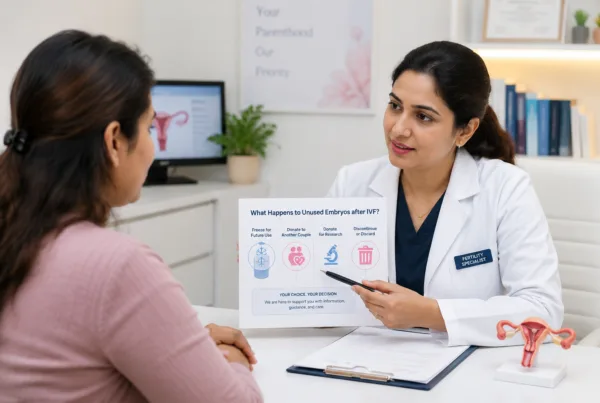
Starting IVF can bring many questions, especially about how long treatment takes, what happens at each stage, and when you can expect results. Typically, one IVF cycle takes around 4–6 weeks from the beginning of ovarian stimulation to the pregnancy test, although preliminary assessments and additional procedures can extend the overall timeline. Understanding each stage can help you plan your treatment with greater confidence.
At Almond Blossoms, Dubai, fertility care combines medical expertise with psychological support, helping you understand both the physical and emotional aspects of IVF treatment.
How Long Does the IVF Process Take from Start to Finish?
A typical IVF cycle takes approximately 4–6 weeks from the start of ovarian stimulation to the pregnancy test. However, the complete process may take 2–3 months or longer when you include initial consultations, fertility assessments, treatment preparation, and any additional procedures.
Your exact IVF timeline depends on several factors, including your age, ovarian reserve, hormone levels, response to medication, and whether you need genetic testing or a frozen embryo transfer.
Typical IVF timeline at a glance
- Initial consultation and fertility assessment
1–2 weeks or longer, depending on investigations - Ovarian stimulation
Approximately 8–12 days - Egg retrieval
Usually 10–14 days after stimulation begins - Fertilisation and embryo development
Approximately 3–6 days after egg retrieval - Embryo transfer
Usually within the same cycle or in a later cycle - Pregnancy test
Usually 9–14 days after embryo transfer
These are general estimates. Your fertility specialist will provide a personalised treatment schedule.

What Are the Stages of IVF Treatment?
Understanding each stage of IVF can make the process feel more manageable. Your fertility specialist will guide you through the necessary investigations, medication, and procedures based on your individual circumstances.
1. Initial consultation and fertility testing
Estimated duration: 1–2 weeks or longer
The IVF process usually begins with a consultation with a fertility specialist. During this appointment, your medical history, previous fertility treatments, menstrual cycle, and reproductive health are reviewed.
You and your partner may be advised to undergo several investigations, such as:
- AMH (Anti-Müllerian Hormone) test: A blood test that helps estimate your ovarian reserve, or the number of eggs remaining in your ovaries.
- Ultrasound scan: Used to assess the ovaries, uterus, and developing follicles.
- Hormone testing: Helps evaluate reproductive hormone levels.
- Semen analysis: Assesses sperm count, movement, and shape.
- Additional screening: Other tests may be recommended depending on your medical history.
Once your results are available, your specialist can recommend an appropriate treatment plan, which may include IVF, ICSI, or another form of infertility treatment in Dubai.
2. Ovarian stimulation
Estimated duration: 8–12 days
Ovarian stimulation is the stage in which fertility medications are used to encourage your ovaries to develop multiple mature eggs instead of the single egg typically released during a natural menstrual cycle.
During this stage, you may need daily hormone injections and regular monitoring through ultrasound scans and blood tests. Your specialist will adjust your medication when necessary to support follicle development and reduce the risk of complications.
The duration of stimulation varies from person to person. Your age, ovarian reserve, and response to medication can all influence how long this stage takes.
3. Egg retrieval
Usually 10–14 days after stimulation begins
Once your follicles have developed sufficiently, your fertility specialist will schedule an egg retrieval procedure. A trigger injection is administered at a carefully planned time to help the eggs mature.
Egg retrieval is generally performed under sedation or anaesthesia. Using ultrasound guidance, the specialist passes a fine needle through the vaginal wall to collect eggs from the follicles.
The procedure typically takes around 15–30 minutes, although you may need additional time at the clinic for preparation and recovery. Most patients return home on the same day, with advice on rest and post-procedure care.
4. Fertilisation and embryo development
Estimated duration: 3–6 days
After egg retrieval, the collected eggs are assessed in the laboratory. Suitable eggs are fertilised using sperm to create embryos.
Depending on your circumstances, your specialist may recommend conventional IVF or ICSI (Intracytoplasmic Sperm Injection). In ICSI, a single sperm is injected directly into an egg to assist fertilisation.
The resulting embryos are monitored as they develop. Some may reach the blastocyst stage, typically around day five or six, when the embryo has developed into a more advanced structure suitable for transfer or freezing.
Not every collected egg will fertilise, and not every fertilised egg will develop into a suitable embryo. Your embryology team will explain the results and the available options.
5. Embryo transfer
Usually 3–6 days after fertilisation for a fresh transfer, or in a later cycle for a frozen transfer
Embryo transfer is the stage in which a selected embryo is placed into your uterus using a thin, flexible catheter. It is generally a short procedure and usually does not require anaesthesia.
There are two main types of embryo transfer:
- Fresh embryo transfer: An embryo is transferred during the same treatment cycle as egg retrieval, if medically appropriate.
- Frozen embryo transfer (FET): A previously frozen embryo is thawed and transferred in a later cycle after the uterus has been prepared.
Your fertility specialist may recommend freezing embryos if genetic testing is required, your uterine lining needs additional preparation, or a fresh transfer is not suitable for medical reasons.
6. Pregnancy testing
Usually 9–14 days after embryo transfer
After embryo transfer, you will enter the waiting period before your pregnancy test. This can be one of the most emotionally challenging parts of IVF because you may be balancing hope, uncertainty, and anxiety.
Your clinic will advise you when to take a blood test to measure beta-hCG, a hormone produced during pregnancy. Testing too early can lead to misleading results, so it is important to follow your specialist’s instructions.
If the result is positive, your fertility team will arrange follow-up care, including an ultrasound at the appropriate time to assess the pregnancy. If the result is negative, your specialist can discuss what the outcome means and whether any further treatment may be appropriate.
What Factors Can Affect Your IVF Treatment Timeline?
Although a standard IVF cycle takes around 4–6 weeks from ovarian stimulation to pregnancy testing, your treatment may take longer depending on your medical needs and treatment plan.
Age and ovarian reserve
Your age and ovarian reserve can influence how your ovaries respond to fertility medication. An AMH test and ultrasound assessment can help your specialist estimate your ovarian response and plan an appropriate stimulation protocol.
Fresh versus frozen embryo transfer
A fresh embryo transfer may take place within the same cycle as egg retrieval. However, a frozen embryo transfer requires additional preparation and may take place in a subsequent menstrual cycle.
Your specialist may recommend a frozen transfer to allow time for genetic testing, optimise the uterine lining or address specific medical considerations.
Genetic testing
Preimplantation genetic testing (PGT) involves examining cells from an embryo to identify specific chromosomal or genetic findings before transfer. When PGT is recommended, embryos are generally frozen while the results are processed, which can add several weeks to the treatment timeline.
Genetic testing is not necessary for every IVF patient. Your fertility specialist can explain whether it is relevant to your circumstances.
Response to fertility medication
Every patient responds differently to ovarian stimulation. Some may develop mature follicles within the expected timeframe, while others may need adjustments to their medication or additional monitoring.
In certain cases, treatment may be postponed or modified to support safety and improve the suitability of the cycle.
Emotional wellbeing and treatment preparation
Fertility treatment can involve uncertainty, repeated appointments and emotionally demanding decisions. Work commitments, travel arrangements and the need for psychological support may also influence how you plan your treatment.
At Almond Blossoms, integrated psychological support can help you manage treatment-related stress, communicate with your partner and navigate the emotional challenges associated with fertility care.
How Much Does IVF Treatment Cost in Dubai?
The IVF treatment cost in Dubai varies depending on the clinic, treatment protocol, medication requirements, and additional laboratory procedures. The total cost may also differ between a fresh IVF cycle and a frozen embryo transfer.
When comparing IVF treatment in Dubai, it is useful to ask clinics for a detailed breakdown of the costs involved.
Your IVF treatment expenses may include:
- Initial fertility consultation and diagnostic tests
- Ovarian stimulation medications and monitoring
- Egg retrieval and laboratory procedures
- IVF or ICSI fertilisation
- Embryo culture and transfer
- Embryo freezing and storage, if required
- Genetic testing, if recommended
- Frozen embryo transfer and associated medication
Additional costs may arise if you need further investigations, another treatment cycle or additional procedures.
When researching the best IVF clinic in Dubai for your needs, consider more than the initial quoted price. Ask what is included in the treatment package, which services are charged separately, and what follow-up care is available.
A consultation with a fertility specialist can help you understand the likely treatment pathway and prepare a more realistic budget for your circumstances.
How Can You Prepare for Your IVF Journey?
Preparing for IVF involves more than arranging appointments and taking medication. Having a clear understanding of your treatment plan can help you manage practical responsibilities and feel more prepared for each stage.
Prepare for your medical appointments
Before starting treatment, consider preparing a record of your previous fertility investigations, medications, medical history, and any previous pregnancy or treatment outcomes.
You may also wish to prepare questions about your proposed protocol, the expected timeline, potential side effects, and the likelihood of needing additional procedures.
Plan your schedule
IVF involves several appointments, particularly during ovarian stimulation, when ultrasound scans and blood tests help your specialist monitor your response.
If you are working or travelling to Dubai for treatment, discuss the expected appointment schedule with your clinic. This can help you plan time away from work and arrange transport or accommodation where needed.
Support your emotional wellbeing
The IVF process can involve periods of anticipation, disappointment and uncertainty. You may find it helpful to discuss your feelings with your partner, a trusted person or a qualified mental health professional.
Psychological support can help you develop coping strategies, manage fertility-related anxiety and make space for your emotional needs while undergoing treatment.
Almond Blossoms offers fertility care alongside psychological support, allowing you to discuss both the medical and emotional aspects of your experience.
Understand your treatment options
IVF is not the only fertility treatment available. Depending on the cause of infertility and your medical history, your specialist may discuss IUI (Intrauterine Insemination), ICSI, or other appropriate options.
Understanding the differences between these treatments can help you take part in informed discussions about your care.
Start Your IVF Journey with a Clearer Plan
Understanding the IVF timeline can help you prepare for each stage, from your initial fertility assessment to embryo transfer and pregnancy testing. Although a typical cycle takes around 4–6 weeks from ovarian stimulation to pregnancy testing, your individual timeline will depend on your medical needs, treatment response, and chosen procedures.
At Almond Blossoms, fertility specialists provide personalised treatment planning alongside psychological support to address the physical and emotional aspects of fertility care.
If you are considering IVF treatment in Dubai, you can arrange a consultation to discuss your fertility assessment, treatment options, expected timeline, and potential costs.
Book a consultation with Almond Blossoms to discuss your IVF treatment plan.
A Consultation in Dubai
→ Website
Frequently Asked Questions (FAQs)
Can IVF be completed in one month?
An IVF cycle may be completed in approximately one month if you are referring to ovarian stimulation, egg retrieval, embryo development, and a fresh embryo transfer. However, pregnancy testing takes additional time, and preliminary fertility assessments may extend the overall process to 2–3 months or longer.
How many days of rest are required after IVF?
Most patients can resume light daily activities within a day or two after egg retrieval or embryo transfer, depending on how they feel and their specialist’s advice. Your clinic may recommend avoiding strenuous exercise and certain activities for a short period. The appropriate recovery time varies from person to person.
Is IVF painful?
IVF can involve some discomfort, but the experience varies. Hormone injections may cause mild discomfort, while ovarian stimulation can lead to bloating or pelvic pressure. Egg retrieval is usually performed under sedation or anaesthesia. Embryo transfer is generally a short procedure that causes little or no pain.
Does IVF always result in pregnancy?
No. IVF does not guarantee pregnancy, even when embryos develop successfully and are transferred. Outcomes depend on several factors, including age, embryo quality, reproductive health, and individual medical circumstances. Your fertility specialist can discuss realistic expectations based on your clinical assessment.
Can I work while undergoing IVF treatment?
Many people continue working during IVF, particularly during the early stages. However, frequent monitoring appointments, egg retrieval, and recovery may require some flexibility. Planning your schedule and discussing any work-related concerns with your fertility team can help you manage treatment alongside your daily responsibilities.